Everything You Need to Know About iBuyers and the “Instant Cash Offer”

Technology is changing the way we do almost everything, and real estate transactions are no exception. In fact, a new crop of tech companies wants to revolutionize the way we buy and sell homes. iBuyer startups like Opendoor, Offerpad, and Properly are rapidly expanding into new territories, and now established players, like Zillow, are heavily involved in the action, especially in the Denver metro real estate market. Also known as Direct Buyers, these companies use computer algorithms to provide sellers with a quick cash offer to buy their home. While the actual market share of iBuyers remains small, their big advertising budgets have helped create a noticeable buzz in the industry. This has left many of our clients curious about them and how they work. In this article, we explain their business model, weigh the pros and cons of working with an iBuyer, and share strategies you can use to protect yourself if you choose to explore this new option to buy or sell your home.

FIRST, HOW DOES THE iBUYER PROCESS WORK? While each company operates a little differently, the basic premise is the same. A seller (or seller’s agent) completes a brief online form that asks questions about the size, features, and condition of the property. Some also request digital photos of the home. The iBuyer will use this information to determine whether or not the home fits within their “buy box,” or set of criteria that matches their investment model. They are generally looking for houses they can easily value and “flip.” In most cases, their ideal property is a moderately priced, single-family home located in a neighborhood with many similar houses. The property shouldn’t require any major renovations before listing.1 These qualities make it easier to assess value (lots of comparable sales data) and help to reduce risk and minimize carrying costs. Once the iBuyer has used their algorithm to determine the amount they are willing to pay, they will email an offer to the seller, usually within a few days. The offer should also disclose the company’s service fee, which is typically between 7% and 12% of the purchase price.2 If the seller accepts, an in-person visit and inspection are scheduled. The iBuyer will ask for a reduction in price to cover any defects they find during the process. Once the sale closes, they will make the necessary updates and repairs and then resell the home on the open market.

Pros and Cons of Working with iBuyers


WHAT ARE THE PROS AND CONS OF SELLING TO AN iBUYER? Of course, the biggest benefit of selling your home to an iBuyer is convenience. For some homeowners, the stress and disruption of preparing and listing their home can feel overwhelming. And what busy family with kids and pets wouldn’t want to skip the hassle of keeping their house “show ready” for potential buyers? Additionally, many sellers like the predictability of a cash buyer and the flexibility to choose their closing date. However, this added convenience does come at a cost. An iBuyer is an investor looking to make a profit. So their purchase offer is usually below true market value. When you tack on service fees of up to 12% and deductions for updates and repairs, studies show that sellers who work with iBuyers net a lower amount than those that list the traditional way.3 In fact, a MarketWatch investigation found that transactions involving iBuyers net the seller 11% less than if they would have sold their home with an agent on the open market.2

WHAT ARE THE PROS AND CONS OF BUYING FROM AN iBUYER? Buying a home from an iBuyer is a lot like buying a home from any investor. The pros are that it’s usually clean, neutral, and moderately updated. You’ll often find fresh paint and modern finishes. And because it’s uninhabited (no one is living there), you don’t have to work around a seller’s schedule to see the home. However, there are some pitfalls to avoid when working with iBuyers. Speed is of the essence, so sometimes the renovations are rushed and the quality can suffer. Also, their investment margins don’t leave much room for negotiating a price reduction or additional repairs. That leaves buyers —who have already invested hundreds of dollars in an inspection—little recourse if any issues are uncovered.4 That’s one of the reasons we always recommend viewing properties with an agent. During your visit, a real estate professional can point out any “red flags” at the home, provide background information about the neighborhood, and help you assess its true market value. That way, you don’t invest time and money in a high-risk or overpriced property. Safety is also a concern. Some companies allow buyers to access their homes via a smartphone app. While it may seem convenient, it provides an easy way for squatters and others to enter the home illegally.5 Luckily, since most iBuyers (and traditional sellers) pay a buyer agent’s commission, you can benefit from the guidance and expertise of a real estate professional … at no cost to you!

HOW CAN I PROTECT MYSELF IF I CHOOSE TO WORK WITH AN iBUYER? While it may seem like the “quick and easy” way to go, working with an iBuyer can present some unique challenges. For example, they are notorious for presenting a strong initial purchase offer and then whittling it down with a long list of costly updates and repairs once they complete their inspection.2 And unlike a traditional buyer who is incentivized to make a deal work, iBuyers can easily walk away if you don’t meet their demands. Just like you wouldn’t go to court without a lawyer, you shouldn’t enter into a real estate transaction without an advocate to represent you. Having a professional agent on your side can be especially important when negotiating with an iBuyer. Remember, they employ sophisticated representatives and a team of lawyers who are focused on maximizing their profits, not yours. You need someone in your corner who has the skills and knowledge to ensure you get a fair deal and who understands the terms of their contracts, so you don’t encounter any unpleasant surprises along the way. Overall, we think the emergence of new technology that helps to streamline the real estate process is exciting. And if we believe a client can benefit from working with an iBuyer, we present it as an option. But there is—inevitably—a cost to the convenience. After all, most iBuyers eventually list the properties they acquire on the open market, which is still the best place to find a buyer if you want to maximize the sales price of your home.

EXPLORE YOUR OPTIONS Do you want to learn more about iBuyers and other options currently available in the Boulder area to buy or sell your home? We can help you determine the best path, given your unique circumstances. Contact us at 303-475-6269 to schedule a free, no-obligation consultation!

Sources:

  1. The Dallas Morning News – https://www.dallasnews.com/business/real-estate/2019/07/11/so-called-ibuyer-real-estate-firms-pitch-programs-to-buy-your-house-help-you-hunt-for-another/
  2. MarketWatch – https://www.marketwatch.com/story/selling-your-home-to-an-ibuyer-could-cost-you-thousands-heres-why-2019-06-11
  3. Forbes – https://www.forbes.com/sites/alyyale/2019/08/16/study-shows-ibuyers-cost-home-sellers-thousands-is-convenience-worth-the-price/#697ac0c42269
  4. US News & World Report – https://realestate.usnews.com/real-estate/articles/what-to-expect-when-buying-a-home-from-an-ibuyer
  5. Inman – https://www.inman.com/2019/09/11/police-arrest-couple-found-squatting-in-opendoor-home-with-their-kids/

Top 10 Myths That Trip Up First-Time Home Buyers

 Top 10 Myths That Trip Up First-Time Home Buyers Boulder Real Estate

If you’re thinking about buying a home, you’ve probably received your share of advice from family and friends. Add to that the constant stream of TV shows, news segments, and social media posts that over-simplify the home buying process for easy entertainment. 

With so much information to sift through, it can be tough to distinguish fact from fiction. That’s why we’re revealing the truth behind some of the most common home buyer myths and misconceptions.

Buying a home is a big decision, but it doesn’t have to be a scary one. If you arm yourself with knowledge and a qualified team of support professionals, you’ll be well equipped to make the right choices for your family and financial future.


DON’T FALL FOR THESE COMMON HOME BUYER MYTHS

Myth #1: You need a 20% down payment.

Plenty of buyers are purchasing homes with down payments that are much less than 20% of the total cost of the property. Today, you can buy a home with as little as 3-5% down.

There are multiple programs out there that allow you to have a lower down payment, and a lender or mortgage broker can talk you through which option is the best for you. Since you’re putting less money down, you’re a riskier borrower to your lender than people who put down a full 20%. Because of this, you will most likely need to pay mortgage insurance as part of your monthly payment. 

Myth #2: Real estate agents are expensive.

Your agent is with you every step of the way throughout your home buying journey, and he or she spends countless hours working on your behalf. It sounds like having an agent is expensive, right? Well, not for you. Buyers usually don’t pay a real estate agent’s commission. Your agent’s fee is paid for at closing by the seller of the home you’re buying.1 The seller knows to factor this cost into the property’s total purchase price.

Myth #3: Don’t call a real estate agent until you’re ready to buy.

The earlier you bring in an agent to help with the purchasing process, the better. Even if you’re in the very early stages of casually browsing Zillow, a real estate professional can be a huge help.

They can create a search for you in the Multiple Listing Service (MLS), so you get notifications for every house that meets your criteria as soon as it hits the market. The MLS is typically more up-to-date than popular home search sites like Zillow and Trulia. Setting up a search a few months before you’re considering buying gives you a good idea of what’s out there in your town that’s in your budget. Reviewing the MLS and speaking with an agent as soon as possible can help you set realistic expectations for when you actually start the house hunting process.


Myth #4: Fixer-uppers are more budget friendly.

We’ve all watched the shows on HGTV that encourage people to go after fixer-uppers because they’re more affordable and allow buyers to eventually renovate the home to include everything on their wishlist. But, this isn’t always the case.

Sometimes, homes that need a lot of work also require a lot of money. Big renovations, like add-ons, a total kitchen remodel, or installing a pool, take a lot longer than it looks on TV. If you’re really interested in a fixer-upper, ask your agent to show you a mix of newer homes and older homes. If you fall in love with an older home that needs a lot of work, get some quotes from contractors before you buy so you know the real cost of the renovations and see if you can work them into your budget.


Myth #5: Your only upfront cost is your down payment.

Your down payment is big, but it isn’t the only money you’ll spend during the home buying process. At closing, you’ll pay your down payment, but you’ll also bring closing costs to the table. Closing costs are typically anywhere from 2-4% of the total purchase price of the home.2 This amount includes the cost for items like homeowners insurance, title fees, and more.

You’ll also need to pay for an inspection before closing, which usually costs a few hundred dollars. This price will be higher or lower based on the size of your new property. Your lender will also require an appraisal. An appraiser will come in and inspect the home to determine how much it’s worth. Depending on your lender, you may have to pay this when the appraisal is conducted or it might be rolled into your closing costs.


Myth #6: You need a high credit score to buy a house.

You don’t need perfect credit to buy the perfect home. There are loans out there that buyers with lower credit scores can qualify for. These are good options for people who have had credit issues in the past, but some of them come with additional fees you will need to pay. Speak to a few local lenders or mortgage brokers to talk through which options might be best for you.


Myth #7: You can’t qualify for a mortgage if you’re still paying off student loans.

While some buyers may feel more comfortable paying off their existing debts before taking the leap into homeownership, it’s not a requirement. When you’re applying for a mortgage, the lender takes a close look at your debt-to-income ratio.3 If you want to calculate this on your own, add up all of your monthly debt payments and divide those by your monthly income. When you’re lender does this, they’re trying to make sure that you will be able to afford your monthly mortgage payments along with your other existing payments. If your income is high enough to allow you to make all of these payments each month, having a student loan will most likely not stop you from getting a mortgage.


Myth #8: You should base your budget on what your lender approves.

How much house you qualify for and how much you can afford are two totally different numbers. When you prequalify for a mortgage, your lender will look at your income, debt, assets, credit score, and financial history to determine how much money you might qualify for.4 For some people, this number might be much higher than you thought because lenders tend to approve for the highest amount they think you can afford. But that doesn’t mean that’s how much you should borrow.

Instead, figure out how much house you can actually afford. An online mortgage calculator can be a good first step in determining this number. We recommend thinking about what you want your monthly payment to be as a starting point. And remember to include your principal, interest, taxes, and, insurance. You should also think about ownership expenses that aren’t part of your monthly payment, like HOA dues and maintenance.


Myth #9: It’s all about location.

You’ve heard the phrase. Location, location, location is basically the real estate industry’s motto, but we’ll let you in on a little known secret: It’s not always true. Yes, location is great to consider when it comes to school districts and commute times, but you also need to think about how the home will function for you and/or your family’s lifestyle. If a family of five is choosing between a one bedroom condo in the bustling city center and a 4-bedroom home out in the suburbs, the latter is probably the best, most functional choice for them. Also, by buying in a less sought after neighborhood, your property taxes will most likely be much lower!

Obviously, you might still want to choose an area with great resale potential, and this is something that your agent can speak to you about. They’re an expert in your city and are constantly monitoring buying and selling trends.


Myth #10: If you look hard enough, you’ll find a home that checks every box on your wishlist.

You’ve seen that famous house hunting show. And while we have our suspicions about how real it is, the one thing they get right is that almost every buyer needs to compromise on something. Yes, the perfect house that meets every item on your wishlist is probably out there, but it’s also probably double or triple your budget.

A long wishlist can be a great starting point for figuring out what you want and don’t want, but we recommend narrowing that wishlist down to the top five things that are important to you in order of priority. We also recommend noting on your wishlist what your absolute deal breakers are, like “must have a yard for our dog,” and noting what you can live without, like “heated bathroom floors.”  

This is a great list to discuss when you first start talking to an agent. A good real estate agent will be able to look at your list and find properties that might work for you. By coming to that first meeting with realistic expectations and knowledge about home buying rather than a bunch of myths heard here and there, you’ll be able to start the process off on the right foot and be in your new house in no time.


WE’RE HERE TO HELP

Whether you’re a first-time buyer or a seasoned homeowner, there’s no reason to go through the home buying process without an advocate on your side. We’re here to answer your questions and do the hard work for you, so you can spend your time dreaming about your new home. Call us today at 303.475.6269 to schedule a free, no-obligation consultation.


Get a FREE copy of our Home Buyer’s Guide to Getting Mortgage Ready

Now that we’ve cleared up these common homebuyer myths, find out if you know the steps you should take to prepare financially before you apply for a mortgage. Contact us at 303.475.6269 to request a complimentary copy of our “Home Buyer’s Guide to Getting Mortgage Ready.”


Sources:

  1. Realtor. com –
    https://www.realtor.com/advice/finance/realtor-fees-closing-costs/
  2. The Balance –
    https://www.thebalance.com/buyer-s-closing-costs-1798422
  3. StudentLoanHero –
    https://studentloanhero.com/featured/student-loans-buying-house/
  4. Zillow –
    https://www.zillow.com/mortgage-learning/pre-qualification-vs-pre-approval/

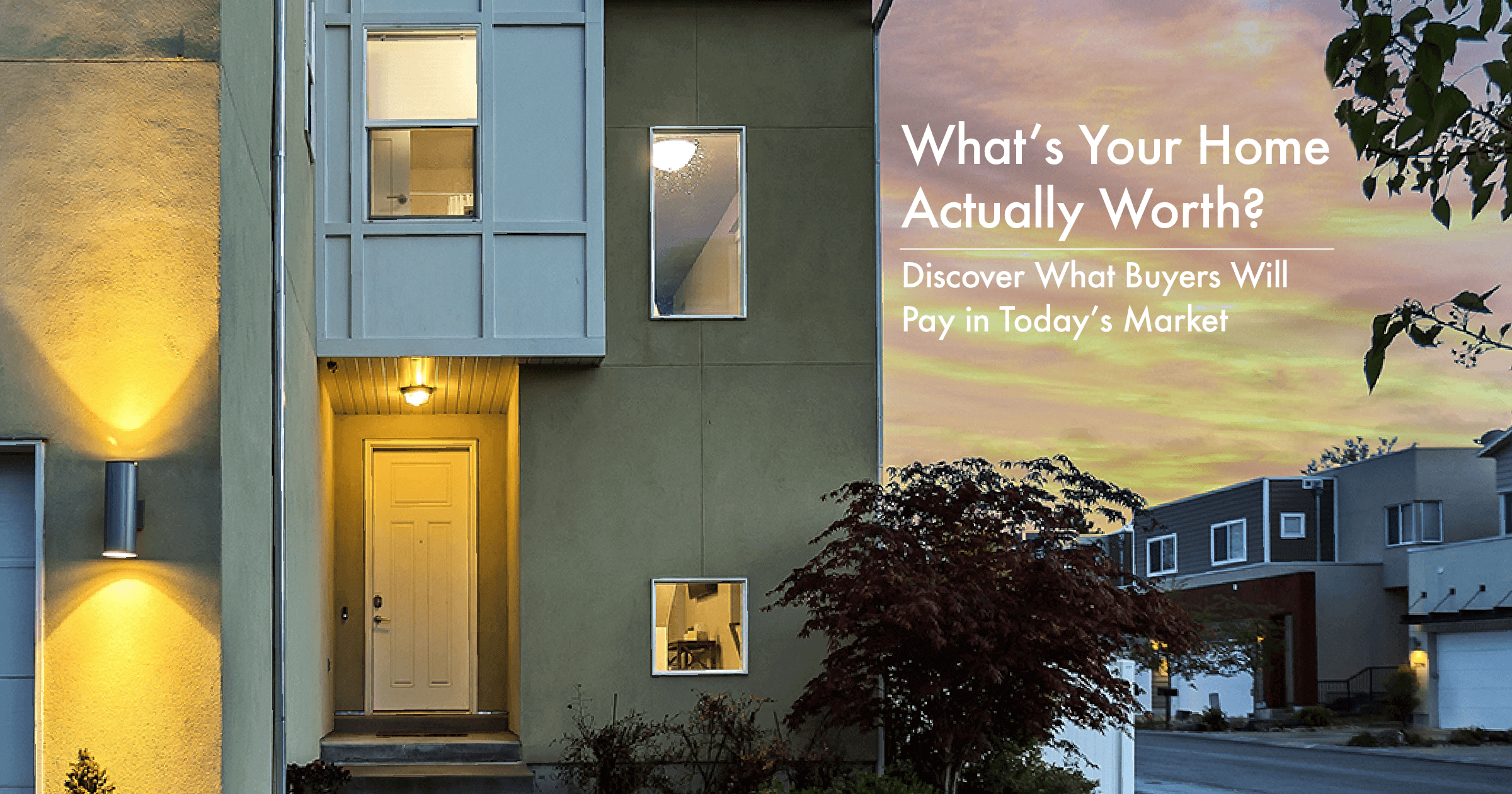
What’s Your Home Actually Worth?

What's Your Home Actually Worth? | Farley Boulder Real Estate


It’s easy to look up how much money you have in your savings account or the real-time value of your stock investments. But determining the dollar value of a home is trickier.

As a seller, knowing your home’s worth helps you price it correctly when you put it up for sale. If you price it too high, it may sit on the market. But price it too low and you may be losing out on a good chunk of money (nobody wants that!). For buyers, it’s important to know a home’s worth before you make an offer. You want your offer to be competitive, but you don’t want to overpay for the property.

Even if you’re not a buyer or seller right now, as a current homeowner you might just be curious about the value of your home. Keeping track of your home’s worth year over year helps you understand the trends in your market. So when you are ready to sell, you can take advantage of a good window of opportunity.

The good news is, a trained real estate agent—who understands the nuances of your particular neighborhood—can determine the true market value of your property … and at no cost to you!


THE THREE TYPES OF HOME VALUES

When you start the process of buying or selling a home, you’ll frequently hear the words appraised value, assessed value, and true market value. It’s important to know the difference between each one so you can make better, informed decisions.

Appraised Value

A professional appraiser is in charge of determining the appraised value of a home. These appraisals are typically required by a lender when a buyer is financing the property. And while the lender is the one requiring this information, the appraiser does not work for the lender.1Your appraiser should be an objective, licensed professional who doesn’t have allegiance to the buyer, seller, or lender—no matter who is paying their fee.

The number the appraiser comes up with (the appraised value) assures the lender that the buyer is not overpaying for the property. For example, imagine a seller lists a home for $400,000. They reach a deal with the buyer to sell the home for $375,000. However, if an appraiser evaluates the property and determines that the appraised value is actually $325,000, then the lender will not lend for an amount higher than that appraised value of $325,000.2

When figuring out this number, an appraiser will compare the property to similar homes in your neighborhood, and they’ll evaluate factors such as location, square footage, appliances, upgrades, improvements, and the interior and exterior of the home. 


Assessed Value

The assessed value of a home is determined by your local municipal property assessor. This value matters when your county calculates property taxes each year. The lower your assessed value, the less property tax you’ll pay.3

To come up with this value, your assessor will evaluate what comparable homes in the neighborhood have sold for, the size of your home, age, overall condition, and any improvements or upgrades that have been made. However, most assessors don’t have full access to your home, so their information is limited.

Assessments are done annually to determine how much property tax you owe. Many counties use a multiplier (typically between 60%-80%) to calculate the final assessed value. So, if the assessor determines that the value of the home is $300,000, but the county uses a 70% multiplier, the assessed value of the home would be $210,000 for tax purposes.4

If your assessed value isn’t as high as you envisioned, don’t sweat it. Many homeowners appeal their assessment in favor of a lower valuation so that they can save money on property taxes. If you’re interested in appealing your property tax assessment, let us know. We offer complimentary assistance and would be happy to help you build your case.


True Market Value

True market value is established by your real estate agent. It basically refers to the value that a buyer is willing to pay for the property. A good real estate agent is an expert in determining true market value because they have hands-on experience buying and selling properties. They understand the mindsets of buyers in your market and know what they’ll pay for a desirable house, townhouse, or condo.

As a seller, knowing your true market value is important because it helps you choose how much to list your property for. It can also help you decide if you want to make any improvements to your home before putting it on the market. Your agent can help you figure out which updates and upgrades will have the biggest impact on your true market value.


WHAT’S THE DEAL WITH ONLINE CALCULATORS?

When figuring out your home’s value, you might be tempted to see what popular real estate sites like Zillow, Redfin, and Trulia have to say. When you use an online calculator to determine your home’s value on these sites, it is just an estimate. It’s not an actual appraisal or the “true market value.” These sites all have their own algorithms for coming up with their estimates. For example, Zillow comes up with their “Zestimates” by calculating “public and user-submitted data, taking into account special features, location, and market conditions.” 5

These online estimates can be a great starting point for opening up the conversation with your real estate agent about your home’s worth. But even Zillow recommends that you use a real estate agent for coming up with the actual market value of your home. The site says that once you get your “Zestimate,” you should still get “a comparative market analysis from a real estate agent.”

Having an agent involved in this process is essential because they understand the market better than a computer ever could. They’re showing property in your city every single day, and they know the particular preferences of buyers and sellers in the area. Young professionals, large families, empty nesters, and other groups are all looking for different things in a home. A local agent has most likely worked with all of them, so they understand what every segment in your market is specifically looking for.


HOW AN AGENT FINDS YOUR HOME’S TRUE MARKET VALUE

So, how does an actual real estate agent determine true market value? They’ll start by doing a comparative market analysis (CMA). This means they’ll compare your home’s features to similar properties in your area. For the CMA, the agent looks at the below factors to influence their assessment of your home’s worth:6

  • Neighborhood sales– Your agent will look at similar, recently sold homes in your neighborhood to see what they sold for and what they have in common with your house.
  • The exterior – What does your home look like from the outside? Your agent will factor in curb appeal, the style of the house, the front and backyard, and anything else that impacts how the house looks to everyone walking and driving by.
  • The interior– This is everything inside the walls of the house. Square footage, number of bedrooms and bathrooms, appliances, and more all influence the overall market value.
  • Age of the home – Whether you have a newer or older home affects the number your agent comes up with as part of their assessment.
  • Style of the home – The style of your home is important because buyers in different markets have different tastes. If buyers prefer ranch-style homes and you have one, then your home may sell for a premium (aka more money!).
  • Market trends –Because a local agent has so much experience in your market, they have their finger on the pulse of your area’s trends and know what buyers are willing to pay for a property like yours.
  • Location, location, location– This one’s probably the most obvious. Your agent will think about how popular the area is, how safe it is, and what schools are like.

A computer algorithm simply can’t take all of these factors into account when calculating the value of your home. The reality is, nothing beats the accuracy of a real estate agent or professional appraiser when it comes to determining a home’s true market value


YOUR AGENT IS THERE EVERY STEP OF THE WAY

Determining a home’s true market value is a real estate agent’s forte. If you’re a seller, your agent will help you find your home’s market value so you can list it at the right price.

For buyers, your agent will help you determine the value so you can come up with a fair offer. Your agent can also set up a personalized home search on the Multiple Listing Service (MLS) for you so you’ll receive emails of listings that meet your criteria. This will help you see what’s out there in your city and how properties are being priced.


Get a Complimentary Report With Your Home’s True Market Value

Curious about your home’s true market value? Call us at 303-475-6269 to request a free, no-obligation Comparative Market Analysis to find out exactly how much your home is worth!


Sources:


  1. Chicago Tribune – https://www.chicagotribune.com/suburbs/chi-ugc-article-what-is-the-difference-between-market-value-a-2013-09-30-story.htm
  2. SFGATE – https://homeguides.sfgate.com/market-value-vs-appraised-value-1206.html
  3. ValuePenguin – https://www.valuepenguin.com/mortgages/what-is-the-assessed-value-of-a-house
  4. Movoto – https://www.movoto.com/blog/homeownership/assessed-value-vs-market-value/
  5. Zillow – https://www.zillow.com/how-much-is-my-home-worth/
  6. Realtor(dot)com – https://www.realtor.com/advice/sell/assessed-value-vs-market-value-difference/


What’s Ahead for Real Estate in 2019?

John Farley Boulder Real Estate Outlook 2019

As we begin another year, everyone wants to know: “Where is the housing market headed in 2019?”

It’s not only buyers, sellers, and homeowners who are impacted. The real estate market plays an integral role in the overall U.S. economy.  Fortunately, key indicators point toward a stable housing market in 2019 with signs of modest growth. However, shifting conditions could impact you if you plan to buy, sell, or refinance this year.


HOME VALUES WILL INCREASE

The value of real estate will continue to rise. Freddie Mac predicts housing prices will increase by 4.3 percent in 2019.1  While the rapid price appreciation we witnessed earlier in the decade has slowed, the combination of a strong economy, low unemployment, and a lack of inventory in many market segments continues to push prices higher.

“Ninety percent of markets are experiencing price gains while very few are experiencing consistent price declines,” according to National Association of Realtors (NAR) Chief Economist Lawrence Yun.2

Yun predicts that the national median existing-home price will increase to around $266,800 in 2019 and $274,000 in 2020. “Home price appreciation will slow down—the days of easy price gains are coming to an end—but prices will continue to rise.”

What does it mean for you? If you’re in the market to buy a home, act fast. Prices will continue to go up, so you’ll pay more the longer you wait. If you’re a current homeowner, real estate has proven once again to be a solid investment over the long term. In fact, the equity level of American homeowners reached an all-time high in 2018, topping $6 trillion.3


SALES LEVELS WILL STABILIZE

In 2018, we saw a decline in sales, primarily driven by rising mortgage rates and a lack of affordable inventory. However, Yun isn’t alarmed. “2017 was the best year for home sales in ten years, and 2018 is only down 1.5 percent year to date. Statistically, it is a mild twinge in the data and a very mild adjustment compared to the long-term growth we’ve been experiencing over the past few years.”2

Yun and other economists expect home sales to remain relatively flat over the next couple of years. Freddie Mac forecasts homes sales will increase 1 percent to 6.08 million in 2019 and 2 percent to 6.20 million in 2020.1

“The medium and long-term prospects for housing are good because demographics are going to continue to support demand,” explains Tendayi Kapfidze, chief economist for LendingTree. “With a slower price appreciation, incomes have an opportunity to catch up. With slower sales, inventory has an opportunity to normalize. A slowdown in 2019 creates a healthier housing market going forward.”4

What does it mean for you?If you’ve been scared off by reports of a market slowdown, it’s important to keep things in perspective. A cooldown can prevent a hot market from becoming overheated. A gradual and sustainable pace of growth is preferable for long-term economic stability.

MORTGAGE RATES WILL RISE

The Mortgage Bankers Association predicts the Federal Reserve will raise interest rates three times this year, resulting in a rise in mortgage rates.5While no one can predict future mortgage rates with certainty, Realtor.com Chief Economist Danielle Hale estimates that the rate for a 30-year mortgage will reach 5.5 percent by the end of 2019, up from around 4.62 percent at the end of 2018.6

While mortgage rates above 5 percent may seem high to today’s buyers, it’s not out of line with historical standards. According to Hale, “The average mortgage rate in the 1990s was 8.1 percent, and rates didn’t fall below 5 percent until 2009. So for buyers who can make the math work, buying a home is likely still an investment worth making.”7

What does it mean for you?If you’re in the market to buy a house or refinance an existing mortgage, you may want to act quickly before mortgage rates rise. To qualify for the lowest rate available, take steps to improve your credit score, pay down existing debt, and save up for a larger down payment.


AFFORDABILITY ISSUES WILL PERSIST

Although the desire to own a home remains strong, the combination of higher home prices and rising mortgage rates will make it increasingly difficult for many first-time buyers to afford one.

“Buyers who are able to stay in the market will find less competition as more buyers are priced out but feel an increased sense of urgency to close before it gets even more expensive,” according to Hale. “Although the number of homes for sale is increasing, which is an improvement for buyers, the majority of new inventory is focused in the mid-to-higher-end price tier, not entry-level.”6

What does it mean for you? Unfortunately, market factors make it difficult for many first-time buyers to afford a home. However, as move-up buyers take advantage of new high-end inventory, we could see an increase in starter homes hitting the market.

MILLENNIALS WILL MAKE UP LARGEST SEGMENT OF BUYERS

“The housing market in 2019 will be characterized by continued rising mortgage rates and surging millennial demand,” according to Odeta Kushi, senior economist for First American. “Rising rates, by making housing less affordable, will likely deter certain potential homebuyers from the market. On the other hand, the largest cohort of millennials will be turning 29 next year, entering peak household formation and home-buying age, and contributing to the increase in first-time buyer demand.”4

Danielle Hale, chief economist for Realtor.com, predicts the trend will continue. “Millennials are also likely to make up the largest share of home buyers for the next decade as their housing needs adjust over time.”6

What does it mean for you? If you’re in the market for a starter home, prepare to compete for the best listings. And if you plan to sell a home in 2019, be sure to work with an agent who knows how to reach millennial buyers by utilizing the latest online marketing techniques.


WE’RE HERE TO GUIDE YOU

While national real estate numbers and predictions can provide a “big picture” outlook for the year, real estate is local. And as Boulder market experts, we can guide you through the ins and outs of our market and the local issues that are likely to drive home values in your particular neighborhood.

If you’re considering buying or selling a home in 2019, contact us now to schedule a free consultation. We’ll work with you to develop an action plan to meet your real estate goals this year.

START PREPARING TODAY

If you plan to BUY this year:

  1. Get pre-approved for a mortgage. If you plan to finance part of your home purchase, getting pre-approved for a mortgage will give you a jump-start on the paperwork and provide an advantage over other buyers in a competitive market. The added bonus: you will find out how much you can afford to borrow and budget accordingly.
  2. Create your wish list. How many bedrooms and bathrooms do you need? How far are you willing to commute to work? What’s most important to you in a home? We can set up a customized search that meets your criteria to help you find the perfect home for you.
  3. Come to our office. The buying process can be tricky. We’d love to guide you through it. We can help you find a home that fits your needs and budget, all at no cost to you. Give us a call to schedule an appointment today! 

If you plan to SELL this year:

  1. Call us for a FREE Comparative Market Analysis. A CMA not only gives you the current market value of your home, it will also show how your home compares to others in the area. This will help us determine which repairs and upgrades may be required to get top dollar for your property, and it will help us price your home correctly once you’re ready to list.
  2. Prep your home for the market. Most buyers want a home they can move into right away, without having to make extensive repairs and upgrades. We can help you determine which ones are worth the time and expense to deliver maximum results.
  3. Start decluttering. Help your buyers see themselves in your home by packing up personal items and things you don’t use regularly and storing them in an attic or storage locker. This will make your home appear larger, make it easier to stage … and get you one step closer to moving when the time comes!

Sources:

  1. Freddie Mac Economic & Housing Research Forecast –
    http://www.freddiemac.com/research/pdf/201811-Forecast-04.pdf
  2. National Association of Realtors 2019 Forecast –
    https://www.nar.realtor/newsroom/2019-forecast-existing-home-sales-to-stabilize-and-price-growth-to-continue
  3. Bankrate 2018 Year in Review –
    https://www.bankrate.com/mortgages/year-in-review-for-housing-market/’
  4. Forbes 2019 Real Estate Forecast –
    https://www.forbes.com/sites/alyyale/2018/12/06/2019-real-estate-forecast-what-home-buyers-sellers-and-investors-can-expect/#a98b80a70d9a
  5. Mortgage Bankers Association Forecast –
    https://www.mba.org/2018-press-releases/october/mba-forecast-purchase-originations-to-increase-to-12-trillion-in-2019
  6. com 2019 National Housing Forecast –
    https://www.realtor.com/research/2019-national-housing-forecast/
  7. FOX Business –
    https://www.foxbusiness.com/personal-finance/where-mortgage-rates-are-headed-in-2019


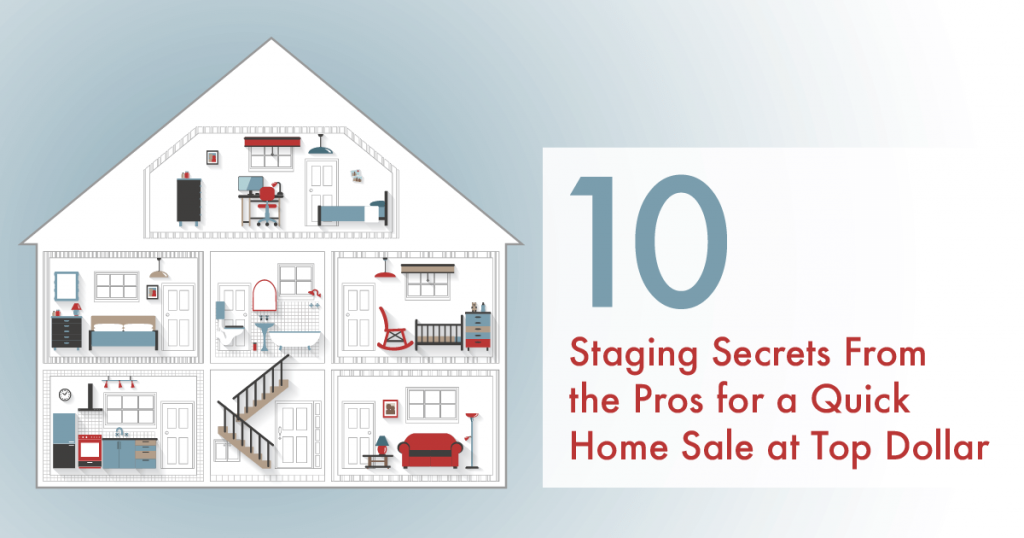
10 Staging Secrets From the Pros for a Quick Home Sale at Top Dollar

Farley Top 10 Home Staging Tips


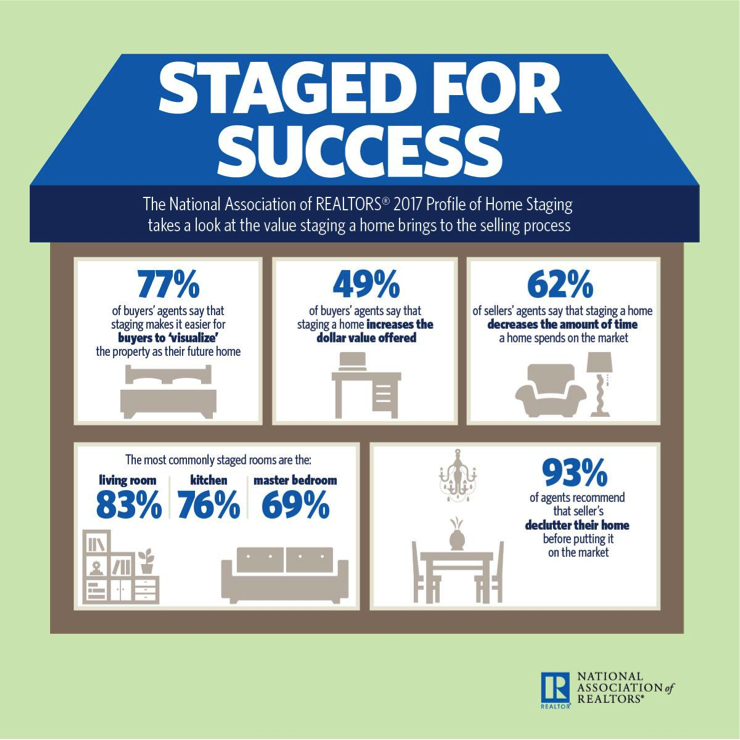
According to the National Association of Realtors, staging a home prior to listing it can result in a faster and more profitable sale.1 In fact, the Real Estate Staging Association estimates that professionally staged properties spend 73 percent less time on the market, receive more foot traffic, and typically sell for more money.2

John Farley - 10 Staging Secrets from the Pros for a Quick Home Sale at Top Dollar Infographic

Following are 10 tips you can use to get your home “show ready” prior to hitting the market. These easy and cost-effective ideas will help your house look its best—and help buyers visualize themselves living there. Even if you’re not currently in the market to sell, you can use these tactics to breathe new life into your existing home decor. 

To get a plan customized for your particular property, give us a call to schedule a free consultation. We’d be happy to share our insider knowledge of the buyer preferences in your neighborhood … so you’ll know where to focus your time, money and energy to maximize your results.


1. REMOVE CLUTTER 

Decluttering is typically the first thing we tell clients to do to prepare their home for sale. And according to the National Association of Realtors, a whopping 93 percent of agents agree.1Decluttering is the act of removing excess “stuff” from your home to make it appear clean and spacious.

Overflowing closets and cluttered countertops can make your house feel small and cramped. In contrast, sparsely-filled closets and clear countertops will make your home appear larger and assure buyers that there will be plenty of room to store their belongings.

Don’t neglect drawers, cupboards and even your refrigerator in your decluttering efforts. Serious buyers will check out every nook and cranny of your home, so pack up anything you don’t use on a daily basis and store it off site. The same goes for jewelry, sensitive documents, prescription medication, firearms and other items of value. Store them in a locked safe or storage unit before opening your property to buyers. 

Make sure any items that remain are clean, tidy and well organized. The good news is, when it comes time to move, a large portion of your packing will be done!


2. DEEP CLEAN AND DEODORIZE

From carpets to bathrooms to appliances, having a clean home is a MUST. If you’ve ever checked into a dirty hotel room, you can imagine how buyers can be turned off by a home that hasn’t been thoroughly cleaned.

If you have a large home, or are short on time, you may want to invest in a professional cleaning service. And if you have carpet, we generally recommend you rent a steam cleaner or hire a company to clean your carpets for you.

In addition to cleaning, it’s equally important to neutralize odors in your home that can be off-putting to buyers, especially pet smells and cigarette smoke. If the weather allows, open your windows and let in fresh air. Empty the trash frequently, and especially before a showing. Avoid cooking any strong-smelling food such as fish or heavy spices. You may need to clean (or remove) drapes and upholstery if odors are particularly strong.

Try to keep your home in clean, show-ready condition while it’s on the market. You never know when a potential buyer will want to drop by for a viewing.


3. DEPERSONALIZE

Your family photos and personal mementos are often your most treasured possessions. For many of us, they are what make a house a home. However, buyers will have a hard time envisioning themselves living in a place if it feels like YOUR home.

Pack up any items that are personal to you and your family, such as photos, books, children’s artwork, travel souvenirs and religious items. Collectibles and excessive knickknacks can be distracting to buyers. Instead, keep your decor items minimal and generic to appeal to the largest number of buyers.


4. NEUTRALIZE YOUR COLOR PALETTE

Along those same lines, bold color choices may not appeal to all buyers. By incorporating a neutral color palette throughout your home, buyers can better visualize the addition of their own furniture and decor, which may contrast with your current color scheme.

But don’t limit yourself to white and beige. Incorporating earth tones and midtone neutrals—like mocha and “greige” (grey-beige)—can add a touch of modern sophistication to your decor.3


One of the quickest and most cost-effective ways to neutralize your home’s decor is with paint. Walls painted in dark, bold or bright colors can turn off buyers. A fresh coat of paint in a neutral color like greige (try Benjamin Moore’s Revere Pewter) or warm white (such as Kelly-Moore’s Rotunda White) offers a clean palette upon which buyers can visualize adding their own personal touches.4

If your sofa is worn, stained or has a bold pattern, consider purchasing a neutral-colored slipcover. Dated or overly busy window coverings should be taken down or replaced. Instead, bring in tasteful pops of color with throw pillows and accessories.


5. INCREASE YOUR CURB APPEAL

You only get one chance to make a first impression. According to a 2017 report by the National Association of Realtors, 44 percent of home buyers drove by a property after viewing it online but did NOT go inside for a walkthrough.5That means if your curb appeal is lacking, buyers may never make it through the door.

Walk around your home and look for any neglected areas that might seem like “red flags” to buyers, such as missing roof shingles or rotted siding. Trim trees and shrubs if needed, and make sure your lawn and flower beds are well maintained. Add some colorful flowers to your front beds and/or flower boxes to brighten up your landscaping.

Make sure the exterior of your home is as clean as the interior. This can often be accomplished with a simple garden hose. But if your siding, walkway, or driveway are stained or dingy, you may want to rent a pressure washer.

Thoroughly wash windows and screens, and remove and store dark solar screens if you have them. Open shutters, curtains and blinds, which will not only make your house look more inviting from the outside, it will brighten the inside.

Consider a fresh coat of paint on your front door, trim and shutters. And small, cosmetic improvements like new house numbers, a colorful wreath and a clean front doormat can have a big impact.6


6. FRESHEN KITCHENS AND BATHS

Kitchens and bathrooms will show better and appear larger if all items are cleared from the countertops, except for one or two decorative pieces.7You should have already packed up non-essentials during your decluttering process, and the remaining items should be neatly stored in pantries and cupboards.

If your cabinets are dingy or outdated, adding a fresh coat of paint and new hardware is an easy and inexpensive way to make them modern and bright. Consider purchasing new shower curtains, bath mats and towels for the bathrooms and new dish towels for the kitchen.

Before each showing, make sure kitchens and baths are spotless and trash cans are empty and out of sight. To add a comforting aroma, try baking cookies, or in the fall, simmer some cinnamon sticks and cloves in a pot of water before you leave the house. In the spring, try a vase of fresh cut lilacs.7

7. SET THE TABLE

Buyers often imagine hosting family gatherings in their new home, and the dining room plays a large role in that vision. If your dining room chairs are stained or outdated, you may want to recover them or use slipcovers. In most cases, an imperfect table can be camouflaged with a neutral and stylish tablecloth.

Be sure the table is centered underneath the chandelier and on the area rug if you’re using one. If your dining room is small, remove all other furniture and leave only four chairs.8

Dress up the table using nice tableware and cloth napkins or a table runner and centerpiece. For a long table, try lining up a series of small vessels down the middle.


8. REARRANGE FURNITURE

Start in your living room and think about what you want to emphasize (and de-emphasize) about the space. For example, do you have a beautiful fireplace or a stunning view? If so, arrange the furniture with that focal point in mind. Use a symmetrical seating arrangement to create a cozy conversation area adjacent to the focal point.

If the room is small, consider removing some of the furniture to make it feel larger, especially oversized pieces. That includes oversized television sets, unless it’s a designated media room. Pulling furniture away from the wall can make the room feel more spacious, and placing your largest furniture piece in the far-left corner (as opposed to near the entry) can create the illusion of a larger space.9

For small bedrooms, remove all the furniture except the bed, bedside tables and a dresser. If it’s a large room, add one or two chairs and a table to create a seating area. Place lamps on the bedside tables and seating area if you have one.10 

Make sure each space in your home has a clearly defined purpose. For example, if you’ve been using an extra bedroom as a catch-all storage space, stage it as a guest room or office instead. Turn an awkward alcove into a workstation or a reading corner. Help buyers imagine how they could use the space themselves.3


9. LIGHTEN UP

Lighting can have a drastic impact on the look and feel of a home. Few buyers seek out a dark house; most prefer one that’s light and bright. Make sure windows are clean, and open curtains and blinds to let in the maximum amount of daylight.

Each room should have three types of lighting: ambient (general or overhead), task (such as a reading lamp or under-cabinet light), and accent (such as a floor or table lamp). Aim for a goal of 100 total watts per 50 square feet.11If your mounted light fixtures are dated, replacing them with something more modern is an easy and inexpensive upgrade that can have a big impact.

Strategically placed landscape lighting can add a dramatic effect to your home’s exterior. Welcome evening visitors with a lighted walkway, or use a spotlight to accentuate trees or other landscaping features. Solar lights require no wiring; simply place them in a sunny spot and they will turn on automatically at dusk.


10. HIGHLIGHT YOUR BACKYARD’S BEST FEATURES

While your home’s interior often takes center stage, don’t forget about staging your home’s outdoor areas to help buyers imagine how they could utilize the space.

Even a small patio can become a selling feature with the addition of a cafe table and chairs. Add a tray of plates and coffee cups to help buyers envision a peaceful breakfast on the back porch. Place chairs and wine glasses around an outdoor firepit or hang a hammock with a book in your favorite shady spot.3 These small, simple additions can help buyers visualize the possibilities your backyard has to offer.


BEFORE YOU GET STARTED

If you’re in the market to sell your home, this list provides a great starting point for your preparations. But nothing beats the trained eye and expertise of a real estate agent. Before you do any work, we recommend consulting a professional for advice about your particular property.  

We offer free, no-commitment seller consultations and will walk through your home with you to help you assess which projects and upgrades are worth your time and money, and which ones you can skip.

As Boulder market experts, we are intimately familiar with buyer preferences in our area . We’ll run a comparative market analysis to find out how your home compares to others currently on the market, as well as those that have recently sold. Then we’ll tailor a custom plan to suit your particular property, budget and needs. Even in a hot market like Boulder or the Denver Metro area, details are important to ensure you sell your home quickly and for the best price.

Please call us today at  303-475-6269 with questions or to schedule a free consultation! 

SaveSaveSaveSave

______________________________________________


Sources:

  1. National Association of Realtors –
    https://www.nar.realtor/sites/default/files/migration_files/reports/2017/2017-profile-of-home-staging-07-06-2017.pdf
  2. Real Estate Staging Association –
    http://www.realestatestagingassociation.com/content.aspx?page_id=22&club_id=304550&module_id=164548
  3. Houzz –
    https://www.houzz.com/ideabooks/2661221/list/sell-your-home-fast-21-staging-tips
  4. HGTV –
    https://www.hgtv.com/design/outdoor-design/landscaping-and-hardscaping/10-curb-appeal-tips-from-the-pros-pictures
  5. National Association of Realtors –
    https://www.nar.realtor/sites/default/files/reports/2017/2017-home-buyer-and-seller-generational-trends-03-07-2017.pdf
  6. The Spruce –
    https://www.thespruce.com/must-try-neutral-paint-colors-797983
  7. HouseLogic –
    https://www.houselogic.com/sell/preparing-your-home-to-sell/home-staging-checklist/
  8. com –
    http://www.stagemyownhome.com/staging-the-dining-room.html
  9. com –
    https://www.realtor.com/advice/sell/small-living-room-staging-tricks/
  10. SFGATE –
    http://homeguides.sfgate.com/stage-master-bedroom-34573.html
  11. HGTV –
    https://www.hgtv.com/shows/designed-to-sell/15-secrets-of-home-staging-pictures

SaveSave

SaveSave

SaveSave