by Farley Webmaster | Oct 3, 2019
Technology is changing the way we do almost everything, and real estate transactions are no exception. In fact, a new crop of tech companies wants to revolutionize the way we buy and sell homes. iBuyer startups like Opendoor, Offerpad, and Properly are rapidly expanding into new territories, and now established players, like Zillow, are heavily involved in the action, especially in the Denver metro real estate market. Also known as Direct Buyers, these companies use computer algorithms to provide sellers with a quick cash offer to buy their home. While the actual market share of iBuyers remains small, their big advertising budgets have helped create a noticeable buzz in the industry. This has left many of our clients curious about them and how they work. In this article, we explain their business model, weigh the pros and cons of working with an iBuyer, and share strategies you can use to protect yourself if you choose to explore this new option to buy or sell your home.
FIRST, HOW DOES THE iBUYER PROCESS WORK? While each company operates a little differently, the basic premise is the same. A seller (or seller’s agent) completes a brief online form that asks questions about the size, features, and condition of the property. Some also request digital photos of the home. The iBuyer will use this information to determine whether or not the home fits within their “buy box,” or set of criteria that matches their investment model. They are generally looking for houses they can easily value and “flip.” In most cases, their ideal property is a moderately priced, single-family home located in a neighborhood with many similar houses. The property shouldn’t require any major renovations before listing.1 These qualities make it easier to assess value (lots of comparable sales data) and help to reduce risk and minimize carrying costs. Once the iBuyer has used their algorithm to determine the amount they are willing to pay, they will email an offer to the seller, usually within a few days. The offer should also disclose the company’s service fee, which is typically between 7% and 12% of the purchase price.2 If the seller accepts, an in-person visit and inspection are scheduled. The iBuyer will ask for a reduction in price to cover any defects they find during the process. Once the sale closes, they will make the necessary updates and repairs and then resell the home on the open market.

WHAT ARE THE PROS AND CONS OF SELLING TO AN iBUYER? Of course, the biggest benefit of selling your home to an iBuyer is convenience. For some homeowners, the stress and disruption of preparing and listing their home can feel overwhelming. And what busy family with kids and pets wouldn’t want to skip the hassle of keeping their house “show ready” for potential buyers? Additionally, many sellers like the predictability of a cash buyer and the flexibility to choose their closing date. However, this added convenience does come at a cost. An iBuyer is an investor looking to make a profit. So their purchase offer is usually below true market value. When you tack on service fees of up to 12% and deductions for updates and repairs, studies show that sellers who work with iBuyers net a lower amount than those that list the traditional way.3 In fact, a MarketWatch investigation found that transactions involving iBuyers net the seller 11% less than if they would have sold their home with an agent on the open market.2
WHAT ARE THE PROS AND CONS OF BUYING FROM AN iBUYER? Buying a home from an iBuyer is a lot like buying a home from any investor. The pros are that it’s usually clean, neutral, and moderately updated. You’ll often find fresh paint and modern finishes. And because it’s uninhabited (no one is living there), you don’t have to work around a seller’s schedule to see the home. However, there are some pitfalls to avoid when working with iBuyers. Speed is of the essence, so sometimes the renovations are rushed and the quality can suffer. Also, their investment margins don’t leave much room for negotiating a price reduction or additional repairs. That leaves buyers —who have already invested hundreds of dollars in an inspection—little recourse if any issues are uncovered.4 That’s one of the reasons we always recommend viewing properties with an agent. During your visit, a real estate professional can point out any “red flags” at the home, provide background information about the neighborhood, and help you assess its true market value. That way, you don’t invest time and money in a high-risk or overpriced property. Safety is also a concern. Some companies allow buyers to access their homes via a smartphone app. While it may seem convenient, it provides an easy way for squatters and others to enter the home illegally.5 Luckily, since most iBuyers (and traditional sellers) pay a buyer agent’s commission, you can benefit from the guidance and expertise of a real estate professional … at no cost to you!
HOW CAN I PROTECT MYSELF IF I CHOOSE TO WORK WITH AN iBUYER? While it may seem like the “quick and easy” way to go, working with an iBuyer can present some unique challenges. For example, they are notorious for presenting a strong initial purchase offer and then whittling it down with a long list of costly updates and repairs once they complete their inspection.2 And unlike a traditional buyer who is incentivized to make a deal work, iBuyers can easily walk away if you don’t meet their demands. Just like you wouldn’t go to court without a lawyer, you shouldn’t enter into a real estate transaction without an advocate to represent you. Having a professional agent on your side can be especially important when negotiating with an iBuyer. Remember, they employ sophisticated representatives and a team of lawyers who are focused on maximizing their profits, not yours. You need someone in your corner who has the skills and knowledge to ensure you get a fair deal and who understands the terms of their contracts, so you don’t encounter any unpleasant surprises along the way. Overall, we think the emergence of new technology that helps to streamline the real estate process is exciting. And if we believe a client can benefit from working with an iBuyer, we present it as an option. But there is—inevitably—a cost to the convenience. After all, most iBuyers eventually list the properties they acquire on the open market, which is still the best place to find a buyer if you want to maximize the sales price of your home.
| EXPLORE YOUR OPTIONS Do you want to learn more about iBuyers and other options currently available in the Boulder area to buy or sell your home? We can help you determine the best path, given your unique circumstances. Contact us at 303-475-6269 to schedule a free, no-obligation consultation! |
Sources:
- The Dallas Morning News – https://www.dallasnews.com/business/real-estate/2019/07/11/so-called-ibuyer-real-estate-firms-pitch-programs-to-buy-your-house-help-you-hunt-for-another/
- MarketWatch – https://www.marketwatch.com/story/selling-your-home-to-an-ibuyer-could-cost-you-thousands-heres-why-2019-06-11
- Forbes – https://www.forbes.com/sites/alyyale/2019/08/16/study-shows-ibuyers-cost-home-sellers-thousands-is-convenience-worth-the-price/#697ac0c42269
- US News & World Report – https://realestate.usnews.com/real-estate/articles/what-to-expect-when-buying-a-home-from-an-ibuyer
- Inman – https://www.inman.com/2019/09/11/police-arrest-couple-found-squatting-in-opendoor-home-with-their-kids/
by Farley Webmaster | Mar 19, 2019
It’s easy to look up how much money you have in your savings account or the real-time value of your stock investments. But determining the dollar value of a home is trickier.
As a seller, knowing your home’s worth helps you price it correctly when you put it up for sale. If you price it too high, it may sit on the market. But price it too low and you may be losing out on a good chunk of money (nobody wants that!). For buyers, it’s important to know a home’s worth before you make an offer. You want your offer to be competitive, but you don’t want to overpay for the property.
Even if you’re not a buyer or seller right now, as a current homeowner you might just be curious about the value of your home. Keeping track of your home’s worth year over year helps you understand the trends in your market. So when you are ready to sell, you can take advantage of a good window of opportunity.
The good news is, a trained real estate agent—who understands the nuances of your particular neighborhood—can determine the true market value of your property … and at no cost to you!
THE THREE TYPES OF HOME VALUES
When you start the process of buying or selling a home, you’ll frequently hear the words appraised value, assessed value, and true market value. It’s important to know the difference between each one so you can make better, informed decisions.
Appraised Value
A professional appraiser is in charge of determining the appraised value of a home. These appraisals are typically required by a lender when a buyer is financing the property. And while the lender is the one requiring this information, the appraiser does not work for the lender.1Your appraiser should be an objective, licensed professional who doesn’t have allegiance to the buyer, seller, or lender—no matter who is paying their fee.
The number the appraiser comes up with (the appraised value) assures the lender that the buyer is not overpaying for the property. For example, imagine a seller lists a home for $400,000. They reach a deal with the buyer to sell the home for $375,000. However, if an appraiser evaluates the property and determines that the appraised value is actually $325,000, then the lender will not lend for an amount higher than that appraised value of $325,000.2
When figuring out this number, an appraiser will compare the property to similar homes in your neighborhood, and they’ll evaluate factors such as location, square footage, appliances, upgrades, improvements, and the interior and exterior of the home.
Assessed Value
The assessed value of a home is determined by your local municipal property assessor. This value matters when your county calculates property taxes each year. The lower your assessed value, the less property tax you’ll pay.3
To come up with this value, your assessor will evaluate what comparable homes in the neighborhood have sold for, the size of your home, age, overall condition, and any improvements or upgrades that have been made. However, most assessors don’t have full access to your home, so their information is limited.
Assessments are done annually to determine how much property tax you owe. Many counties use a multiplier (typically between 60%-80%) to calculate the final assessed value. So, if the assessor determines that the value of the home is $300,000, but the county uses a 70% multiplier, the assessed value of the home would be $210,000 for tax purposes.4
If your assessed value isn’t as high as you envisioned, don’t sweat it. Many homeowners appeal their assessment in favor of a lower valuation so that they can save money on property taxes. If you’re interested in appealing your property tax assessment, let us know. We offer complimentary assistance and would be happy to help you build your case.
True Market Value
True market value is established by your real estate agent. It basically refers to the value that a buyer is willing to pay for the property. A good real estate agent is an expert in determining true market value because they have hands-on experience buying and selling properties. They understand the mindsets of buyers in your market and know what they’ll pay for a desirable house, townhouse, or condo.
As a seller, knowing your true market value is important because it helps you choose how much to list your property for. It can also help you decide if you want to make any improvements to your home before putting it on the market. Your agent can help you figure out which updates and upgrades will have the biggest impact on your true market value.
WHAT’S THE DEAL WITH ONLINE CALCULATORS?
When figuring out your home’s value, you might be tempted to see what popular real estate sites like Zillow, Redfin, and Trulia have to say. When you use an online calculator to determine your home’s value on these sites, it is just an estimate. It’s not an actual appraisal or the “true market value.” These sites all have their own algorithms for coming up with their estimates. For example, Zillow comes up with their “Zestimates” by calculating “public and user-submitted data, taking into account special features, location, and market conditions.” 5
These online estimates can be a great starting point for opening up the conversation with your real estate agent about your home’s worth. But even Zillow recommends that you use a real estate agent for coming up with the actual market value of your home. The site says that once you get your “Zestimate,” you should still get “a comparative market analysis from a real estate agent.”
Having an agent involved in this process is essential because they understand the market better than a computer ever could. They’re showing property in your city every single day, and they know the particular preferences of buyers and sellers in the area. Young professionals, large families, empty nesters, and other groups are all looking for different things in a home. A local agent has most likely worked with all of them, so they understand what every segment in your market is specifically looking for.
HOW AN AGENT FINDS YOUR HOME’S TRUE MARKET VALUE
So, how does an actual real estate agent determine true market value? They’ll start by doing a comparative market analysis (CMA). This means they’ll compare your home’s features to similar properties in your area. For the CMA, the agent looks at the below factors to influence their assessment of your home’s worth:6
- Neighborhood sales– Your agent will look at similar, recently sold homes in your neighborhood to see what they sold for and what they have in common with your house.
- The exterior – What does your home look like from the outside? Your agent will factor in curb appeal, the style of the house, the front and backyard, and anything else that impacts how the house looks to everyone walking and driving by.
- The interior– This is everything inside the walls of the house. Square footage, number of bedrooms and bathrooms, appliances, and more all influence the overall market value.
- Age of the home – Whether you have a newer or older home affects the number your agent comes up with as part of their assessment.
- Style of the home – The style of your home is important because buyers in different markets have different tastes. If buyers prefer ranch-style homes and you have one, then your home may sell for a premium (aka more money!).
- Market trends –Because a local agent has so much experience in your market, they have their finger on the pulse of your area’s trends and know what buyers are willing to pay for a property like yours.
- Location, location, location– This one’s probably the most obvious. Your agent will think about how popular the area is, how safe it is, and what schools are like.
A computer algorithm simply can’t take all of these factors into account when calculating the value of your home. The reality is, nothing beats the accuracy of a real estate agent or professional appraiser when it comes to determining a home’s true market value
YOUR AGENT IS THERE EVERY STEP OF THE WAY
Determining a home’s true market value is a real estate agent’s forte. If you’re a seller, your agent will help you find your home’s market value so you can list it at the right price.
For buyers, your agent will help you determine the value so you can come up with a fair offer. Your agent can also set up a personalized home search on the Multiple Listing Service (MLS) for you so you’ll receive emails of listings that meet your criteria. This will help you see what’s out there in your city and how properties are being priced.
Get a Complimentary Report With Your Home’s True Market Value
Curious about your home’s true market value? Call us at 303-475-6269 to request a free, no-obligation Comparative Market Analysis to find out exactly how much your home is worth!
Sources:
- Chicago Tribune – https://www.chicagotribune.com/suburbs/chi-ugc-article-what-is-the-difference-between-market-value-a-2013-09-30-story.htm
- SFGATE – https://homeguides.sfgate.com/market-value-vs-appraised-value-1206.html
- ValuePenguin – https://www.valuepenguin.com/mortgages/what-is-the-assessed-value-of-a-house
- Movoto – https://www.movoto.com/blog/homeownership/assessed-value-vs-market-value/
- Zillow – https://www.zillow.com/how-much-is-my-home-worth/
- Realtor(dot)com – https://www.realtor.com/advice/sell/assessed-value-vs-market-value-difference/
by Farley Webmaster | Feb 13, 2019

If you’re a current homeowner, or in the market to buy, you’re probably curious about the latest trends in home design.
Sellers who make strategic updates before listing a property can generate increased interest from buyers and, in some cases, a premium selling price. And buyers should consider which features of a home will need updating immediately (or in the near future) so they can factor renovation costs into their overall budget.
Even if you have no immediate plans to buy or sell, we advise our clients to be thoughtful about the colors, materials, and finishes they select when planning a remodel. Making over-personalized or unpopular design choices could hurt a home’s value when it does come time to sell. And selecting out-of-style or overly-trendy elements could cause your renovation to feel dated quickly.
To help, we’ve rounded up eight of the hottest home design trends for 2019. Keep in mind, not all trends will work well in every house. If you plan to buy, list, or renovate a property, consult a professional who can help you realize your vision and maximize the impact of your investment.
1. WARMER PAINT COLORS
White and grey aren’t going anywhere, but expect to see warmer tones and more earthy neutrals popping up in 2019. Cold whites are being replaced by warmer, softer whites. And warmer tones of grey have become a popular alternative to the cooler grays we were seeing earlier in the decade. Dove grey—with a lilac undertone—is a particular favorite with designers this year.
Sherwin Williams chose Cavern Clay, a warm terracotta, as its 2019 color of the year, while Behr selected Blueprint, a mid-tone blue. Benjamin Moore’s selection is Metropolitan, a sophisticated grey.
If you’re preparing to sell your home, consider a light, neutral paint color. Neutral colors provide a blank canvas upon which a buyer can envision placing their belongings, and lighter colors make a room appear larger and brighter.
2. MIXED METALS
Don’t feel limited to using one metallic finish throughout your home—or even throughout a single room. Designers are mixing metals in 2019, and their favorites include copper, brass, pewter, gunmetal, and matte black.
Experts suggest picking one metal hue to dominate your color palette and a contrasting tone to complement it. If your room has a warm color palette, choose a warm-hued primary metal, such as brass or copper. For cool palettes, choose a cool-toned metal, like pewter or stainless steel. You can also experiment with mixing finishes, such as polished and hammered copper.
From faucets to cabinet pulls to accent pieces, swapping out your old or dated fixtures is an easy—and relatively inexpensive—way to modernize your decor. Mixing metals adds depth and gives your room a more curated look.
3. OUTDOOR ELEMENTS
Bringing outdoor elements into the home can help warm up a sterile space. And natural materials can soften a modern design esthetic.
Homeowners are increasingly looking for ways to incorporate these materials throughout their home. Especially popular right now: stone, copper, concrete, and wood. From concrete showers to agate stone tiles, designers are finding unexpected ways to bring the outside in.
One notable exception: granite countertops. Engineered quartz—a combination of ground quartz and resin—overtook natural granite stone as the most popular countertop material in 2018. This durable, low-maintenance, highly-customizable product has won over homeowners and designers alike.
4. ALTERNATIVE APPLIANCES
Stainless steel has been the industry standard for years, but the market is trending toward variety and fresh alternatives. Homeowners have more options available than ever to personalize their kitchens with vibrant colors, black stainless, or modern white appliances. Another favorite? Integrated appliances that blend seamlessly into cabinetry. Built-in column refrigerators, which allow you to customize the design and size of your freezer and refrigerator, are becoming a “must-have” in high-end homes.
Advancements in technology have also brought a new wave of appliances to the market. Induction cooktops are replacing commercial gas ranges as a gourmet favorite. And french door ovens and steam ovens are also gaining in popularity—especially ones with smart features you can control from an app on your smartphone.
5. COLORFUL KITCHENS
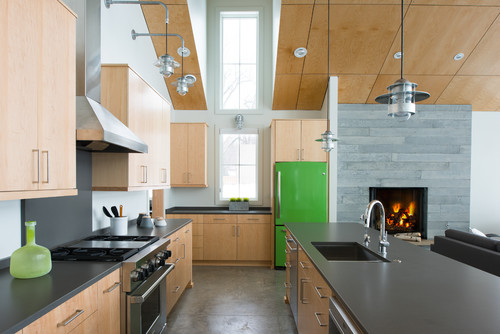
White will always be a classic choice, but color is finally coming back to kitchens. More homeowners are choosing cabinets in alternative neutrals like black, cream, and grey, along with colorful options like green and blue. Also popular? Wood cabinets in stains like warm chestnut and fruitwood.
Two-tone kitchen cabinets remain a homeowner favorite, as well. To incorporate this trend, try pairing darker lower cabinets with lighter upper cabinets or a colorful kitchen island with neutral-colored perimeter cabinets.
6. OPEN SHELVING
Swapping upper kitchen cabinets for open shelves continues to be a popular choice in 2019. It’s a cost-effective update that can make a kitchen feel larger and brighter. However, it’s not a practical option for everyone. Before you commit, test it out by removing your cabinet doors for a few weeks. See how it feels to have your glasses and dishware on display.
Not ready to give up all your upper cabinet storage space? Replace just one or two upper cabinets with open shelves for a lower-commitment but still-updated look.
7. STATEMENT TILE
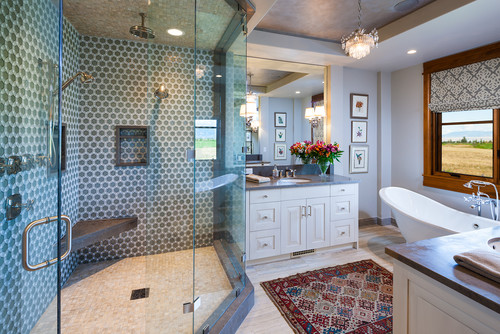
The ubiquitous white subway tile is finally fading in popularity. In 2019, homeowners are gravitating toward more colorful choices, creative textures and finishes, and alternative shapes. Especially hot right now: hexagons, arabesques, diamonds, and Moroccan fish scales.
Natural stone remains a favorite, including marble, quartzite and river rock. But advancements in porcelain tile that mimics stone, and even concrete, has made it an attractive, affordable, and low-maintenance alternative.
8. SHOWCASE CEILINGS
Once an afterthought, ceilings are taking center stage. While 2018 was all about statement walls, statement ceilings are shaping up to be the darling of 2019. Designers are using bold paint colors, wallpaper, intricate moldings, fabric, and other materials to transform a ceiling into something truly special.
Want to incorporate this trend without going too bold? Choose a classic design, like coffered or wooden beams. Or stick with wood paneling or tin tiles for a more timeless look. Even something as simple as painting a ceiling the same color as the walls can make your space feel more modern.
DESIGNED TO SELL
Are you contemplating a remodel? Want to find out how upgrades could impact the value of your home? Give us a call for a free consultation!
Buyer preferences can vary greatly by neighborhood and price range. We can share the insights we’ve gathered from working with buyers in this market … and offer tips on how to maximize the return on your remodeling investment. And if you’re in the market to sell, we can run a Comparative Market Analysis on your home to find out how it compares to others in the area.
Want to learn more about how to stage your home to sell? Contact us at john@coloradolifestyleproperties.com to request a free copy of our report: 10 Staging Secrets From the Pros for a Quick Sale at Top Dollar!
Sources:
- Decor Mag –
https://www.decoraid.com/blog/home-design-trends-2019
- Gates Interior Design –
https://gatesinteriordesign.com/hottest-new-kitchen-and-bath-trends-for-2019/
- House Beautiful –
https://www.housebeautiful.com/home-remodeling/interior-designers/a24844028/home-trends-for-2019/
- Houzz –
https://www.houzz.com/ideabooks/114552119/list/32-home-design-trends-that-will-rule-in-2019
- Invaluable –
https://www.invaluable.com/blog/mixing-metals/
- Real Simple –
https://www.realsimple.com/home-organizing/decorating/decorating-tips-techniques/design-trends-2019-according-to-designers
- Sebring –
https://sebringdesignbuild.com/top-trends-in-kitchen-design/
by Farley Webmaster | May 8, 2018
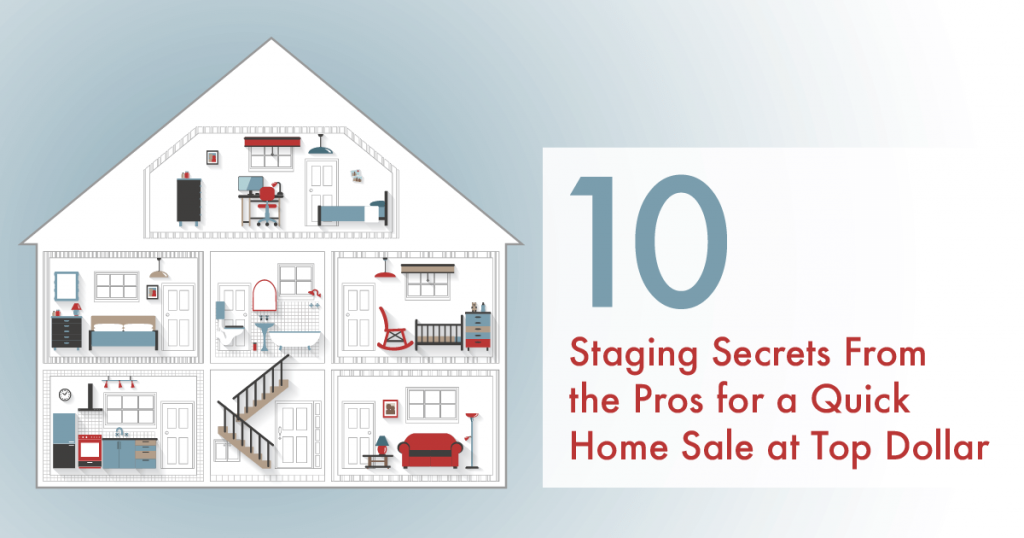
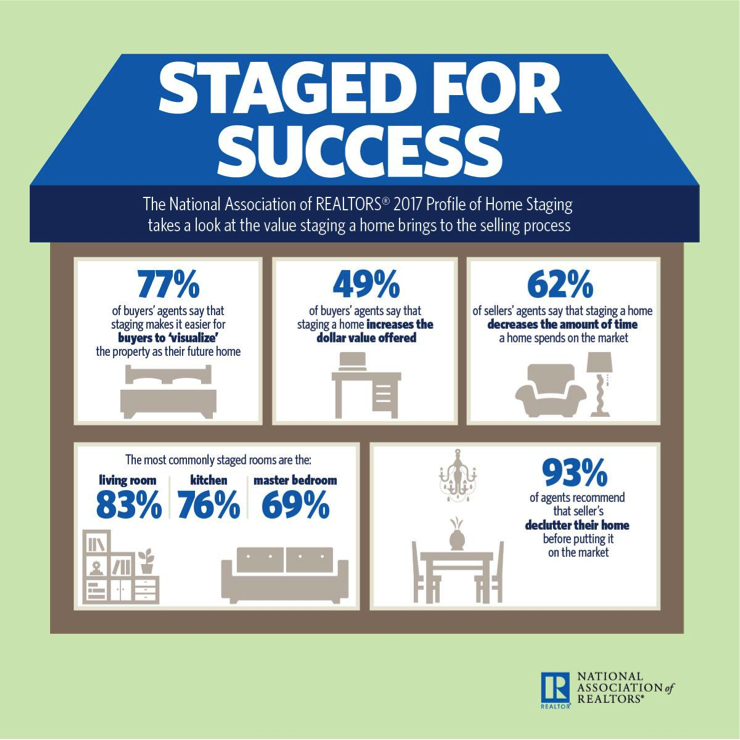
According to the National Association of Realtors, staging a home prior to listing it can result in a faster and more profitable sale.1 In fact, the Real Estate Staging Association estimates that professionally staged properties spend 73 percent less time on the market, receive more foot traffic, and typically sell for more money.2
Following are 10 tips you can use to get your home “show ready” prior to hitting the market. These easy and cost-effective ideas will help your house look its best—and help buyers visualize themselves living there. Even if you’re not currently in the market to sell, you can use these tactics to breathe new life into your existing home decor.
To get a plan customized for your particular property, give us a call to schedule a free consultation. We’d be happy to share our insider knowledge of the buyer preferences in your neighborhood … so you’ll know where to focus your time, money and energy to maximize your results.
1. REMOVE CLUTTER
Decluttering is typically the first thing we tell clients to do to prepare their home for sale. And according to the National Association of Realtors, a whopping 93 percent of agents agree.1Decluttering is the act of removing excess “stuff” from your home to make it appear clean and spacious.
Overflowing closets and cluttered countertops can make your house feel small and cramped. In contrast, sparsely-filled closets and clear countertops will make your home appear larger and assure buyers that there will be plenty of room to store their belongings.
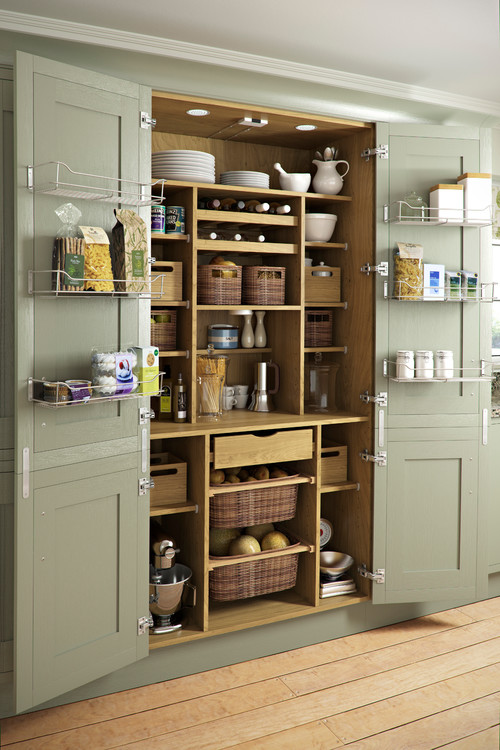
Don’t neglect drawers, cupboards and even your refrigerator in your decluttering efforts. Serious buyers will check out every nook and cranny of your home, so pack up anything you don’t use on a daily basis and store it off site. The same goes for jewelry, sensitive documents, prescription medication, firearms and other items of value. Store them in a locked safe or storage unit before opening your property to buyers.
Make sure any items that remain are clean, tidy and well organized. The good news is, when it comes time to move, a large portion of your packing will be done!
2. DEEP CLEAN AND DEODORIZE
From carpets to bathrooms to appliances, having a clean home is a MUST. If you’ve ever checked into a dirty hotel room, you can imagine how buyers can be turned off by a home that hasn’t been thoroughly cleaned.
If you have a large home, or are short on time, you may want to invest in a professional cleaning service. And if you have carpet, we generally recommend you rent a steam cleaner or hire a company to clean your carpets for you.
In addition to cleaning, it’s equally important to neutralize odors in your home that can be off-putting to buyers, especially pet smells and cigarette smoke. If the weather allows, open your windows and let in fresh air. Empty the trash frequently, and especially before a showing. Avoid cooking any strong-smelling food such as fish or heavy spices. You may need to clean (or remove) drapes and upholstery if odors are particularly strong.
Try to keep your home in clean, show-ready condition while it’s on the market. You never know when a potential buyer will want to drop by for a viewing.
3. DEPERSONALIZE
Your family photos and personal mementos are often your most treasured possessions. For many of us, they are what make a house a home. However, buyers will have a hard time envisioning themselves living in a place if it feels like YOUR home.
Pack up any items that are personal to you and your family, such as photos, books, children’s artwork, travel souvenirs and religious items. Collectibles and excessive knickknacks can be distracting to buyers. Instead, keep your decor items minimal and generic to appeal to the largest number of buyers.
4. NEUTRALIZE YOUR COLOR PALETTE
Along those same lines, bold color choices may not appeal to all buyers. By incorporating a neutral color palette throughout your home, buyers can better visualize the addition of their own furniture and decor, which may contrast with your current color scheme.
But don’t limit yourself to white and beige. Incorporating earth tones and midtone neutrals—like mocha and “greige” (grey-beige)—can add a touch of modern sophistication to your decor.3
One of the quickest and most cost-effective ways to neutralize your home’s decor is with paint. Walls painted in dark, bold or bright colors can turn off buyers. A fresh coat of paint in a neutral color like greige (try Benjamin Moore’s Revere Pewter) or warm white (such as Kelly-Moore’s Rotunda White) offers a clean palette upon which buyers can visualize adding their own personal touches.4
If your sofa is worn, stained or has a bold pattern, consider purchasing a neutral-colored slipcover. Dated or overly busy window coverings should be taken down or replaced. Instead, bring in tasteful pops of color with throw pillows and accessories.
5. INCREASE YOUR CURB APPEAL
You only get one chance to make a first impression. According to a 2017 report by the National Association of Realtors, 44 percent of home buyers drove by a property after viewing it online but did NOT go inside for a walkthrough.5That means if your curb appeal is lacking, buyers may never make it through the door.
Walk around your home and look for any neglected areas that might seem like “red flags” to buyers, such as missing roof shingles or rotted siding. Trim trees and shrubs if needed, and make sure your lawn and flower beds are well maintained. Add some colorful flowers to your front beds and/or flower boxes to brighten up your landscaping.
Make sure the exterior of your home is as clean as the interior. This can often be accomplished with a simple garden hose. But if your siding, walkway, or driveway are stained or dingy, you may want to rent a pressure washer.
Thoroughly wash windows and screens, and remove and store dark solar screens if you have them. Open shutters, curtains and blinds, which will not only make your house look more inviting from the outside, it will brighten the inside.
Consider a fresh coat of paint on your front door, trim and shutters. And small, cosmetic improvements like new house numbers, a colorful wreath and a clean front doormat can have a big impact.6
6. FRESHEN KITCHENS AND BATHS
Kitchens and bathrooms will show better and appear larger if all items are cleared from the countertops, except for one or two decorative pieces.7You should have already packed up non-essentials during your decluttering process, and the remaining items should be neatly stored in pantries and cupboards.
If your cabinets are dingy or outdated, adding a fresh coat of paint and new hardware is an easy and inexpensive way to make them modern and bright. Consider purchasing new shower curtains, bath mats and towels for the bathrooms and new dish towels for the kitchen.
Before each showing, make sure kitchens and baths are spotless and trash cans are empty and out of sight. To add a comforting aroma, try baking cookies, or in the fall, simmer some cinnamon sticks and cloves in a pot of water before you leave the house. In the spring, try a vase of fresh cut lilacs.7
7. SET THE TABLE
Buyers often imagine hosting family gatherings in their new home, and the dining room plays a large role in that vision. If your dining room chairs are stained or outdated, you may want to recover them or use slipcovers. In most cases, an imperfect table can be camouflaged with a neutral and stylish tablecloth.
Be sure the table is centered underneath the chandelier and on the area rug if you’re using one. If your dining room is small, remove all other furniture and leave only four chairs.8
Dress up the table using nice tableware and cloth napkins or a table runner and centerpiece. For a long table, try lining up a series of small vessels down the middle.
8. REARRANGE FURNITURE
Start in your living room and think about what you want to emphasize (and de-emphasize) about the space. For example, do you have a beautiful fireplace or a stunning view? If so, arrange the furniture with that focal point in mind. Use a symmetrical seating arrangement to create a cozy conversation area adjacent to the focal point.
If the room is small, consider removing some of the furniture to make it feel larger, especially oversized pieces. That includes oversized television sets, unless it’s a designated media room. Pulling furniture away from the wall can make the room feel more spacious, and placing your largest furniture piece in the far-left corner (as opposed to near the entry) can create the illusion of a larger space.9
For small bedrooms, remove all the furniture except the bed, bedside tables and a dresser. If it’s a large room, add one or two chairs and a table to create a seating area. Place lamps on the bedside tables and seating area if you have one.10
Make sure each space in your home has a clearly defined purpose. For example, if you’ve been using an extra bedroom as a catch-all storage space, stage it as a guest room or office instead. Turn an awkward alcove into a workstation or a reading corner. Help buyers imagine how they could use the space themselves.3
9. LIGHTEN UP
Lighting can have a drastic impact on the look and feel of a home. Few buyers seek out a dark house; most prefer one that’s light and bright. Make sure windows are clean, and open curtains and blinds to let in the maximum amount of daylight.
Each room should have three types of lighting: ambient (general or overhead), task (such as a reading lamp or under-cabinet light), and accent (such as a floor or table lamp). Aim for a goal of 100 total watts per 50 square feet.11If your mounted light fixtures are dated, replacing them with something more modern is an easy and inexpensive upgrade that can have a big impact.
Strategically placed landscape lighting can add a dramatic effect to your home’s exterior. Welcome evening visitors with a lighted walkway, or use a spotlight to accentuate trees or other landscaping features. Solar lights require no wiring; simply place them in a sunny spot and they will turn on automatically at dusk.
10. HIGHLIGHT YOUR BACKYARD’S BEST FEATURES
While your home’s interior often takes center stage, don’t forget about staging your home’s outdoor areas to help buyers imagine how they could utilize the space.
Even a small patio can become a selling feature with the addition of a cafe table and chairs. Add a tray of plates and coffee cups to help buyers envision a peaceful breakfast on the back porch. Place chairs and wine glasses around an outdoor firepit or hang a hammock with a book in your favorite shady spot.3 These small, simple additions can help buyers visualize the possibilities your backyard has to offer.
BEFORE YOU GET STARTED
If you’re in the market to sell your home, this list provides a great starting point for your preparations. But nothing beats the trained eye and expertise of a real estate agent. Before you do any work, we recommend consulting a professional for advice about your particular property.
We offer free, no-commitment seller consultations and will walk through your home with you to help you assess which projects and upgrades are worth your time and money, and which ones you can skip.
As Boulder market experts, we are intimately familiar with buyer preferences in our area . We’ll run a comparative market analysis to find out how your home compares to others currently on the market, as well as those that have recently sold. Then we’ll tailor a custom plan to suit your particular property, budget and needs. Even in a hot market like Boulder or the Denver Metro area, details are important to ensure you sell your home quickly and for the best price.
Please call us today at 303-475-6269 with questions or to schedule a free consultation!
SaveSaveSaveSave
______________________________________________
Sources:
- National Association of Realtors –
https://www.nar.realtor/sites/default/files/migration_files/reports/2017/2017-profile-of-home-staging-07-06-2017.pdf
- Real Estate Staging Association –
http://www.realestatestagingassociation.com/content.aspx?page_id=22&club_id=304550&module_id=164548
- Houzz –
https://www.houzz.com/ideabooks/2661221/list/sell-your-home-fast-21-staging-tips
- HGTV –
https://www.hgtv.com/design/outdoor-design/landscaping-and-hardscaping/10-curb-appeal-tips-from-the-pros-pictures
- National Association of Realtors –
https://www.nar.realtor/sites/default/files/reports/2017/2017-home-buyer-and-seller-generational-trends-03-07-2017.pdf
- The Spruce –
https://www.thespruce.com/must-try-neutral-paint-colors-797983
- HouseLogic –
https://www.houselogic.com/sell/preparing-your-home-to-sell/home-staging-checklist/
- com –
http://www.stagemyownhome.com/staging-the-dining-room.html
- com –
https://www.realtor.com/advice/sell/small-living-room-staging-tricks/
- SFGATE –
http://homeguides.sfgate.com/stage-master-bedroom-34573.html
- HGTV –
https://www.hgtv.com/shows/designed-to-sell/15-secrets-of-home-staging-pictures
SaveSave
SaveSave
SaveSave
by Farley Webmaster | Aug 30, 2017

More than 77 percent of people own a smartphone.1 The average person checks their smartphone 46 times a day, with people under the age of 24 checking it an average of 74 times a day.1 We check it while we’re waiting in line and during our leisure time, whether we’re scrolling through social media, reading emails or getting up-to-date on the latest news.
Smartphones are not only a useful tool for communication. With the following apps, you can get organized (whether you plan to buy or sell), save money, learn about the homes in your neighborhood and get inspired for your next renovation project. If you’re like 81 percent of people, you have your smartphone with you during most of your waking hours; let it help you stay organized and make your life easier.3
Apps For Homeowners: Get Renovation Inspiration
These apps not only offer ideas for your next remodel or home décor project, some of them even give you a preview of what your home may look like once it’s finished.
1.) Houzz (Free)
The Houzz app is the number one app for home design and it’s no wonder; the app gives you access to all the inspiration, blogs and design ideas from the Houzz site on your phone or tablet. The app features View in My Room 3D, which allows you to view products in your home before you buy. Just take a photo of the space and a 3D version of the product will appear. Browse products, save photos of designs you’d like to view later and connect with local professionals in your area. Whether you’re gathering ideas for your next renovation and décor project or you’re just browsing, the Houzz app will satisfy all your design needs. (Android, iOS)
2.) iHandy Carpenter ($1.99)
Make sure the photos, shelves, mirrors and other artwork you hang are even and aligned with this helpful app. It’s an all-in-one tool kit that features a plumb bob, surface level, bubble level bar, ruler and protractor. No need to purchase these tools separately; just hold your smartphone up to the wall and the app will take care of the rest. (iOS, Android)
3.) Color911 ($3.99)
If you’re thinking of changing the color scheme of your home or want to find the right shades for lamp shades, rugs or throw pillows to match your vintage sofa, the Color911 app provides pre-selected color palettes to match any color scheme. Take a photo of the room or the furniture and the app will create a custom palette full of complementary colors. Write notes about your palette and organize it all into folders to share with family, friends or your design professional. (iOS)
Bonus Apps for Homeowners:
AroundMe (Free)
Hungry and looking for a local hotspot? Meeting friends at a coffee shop nearby? Or just need to find the closest ATM? AroundMe allows you to search for the nearest restaurants, banks, gas stations, book a hotel or find a movie schedule close to where you live. Open the app and start learning more about your neighborhood. (iOS, Android, Windows)
BrightNest (Free)
From keeping things clean to making them colorful, Brightnest, developed by Angie’s List, is loaded with suggestions on how to make your home a better place to live. With categories of customized tips (money-saving, cleaning, eco-friendly, healthy, cooking, and creative) there are plenty of great ways to pull inspiration from the app. BrightNest will help you tackle important home tasks with easy-to-follow instructions, a personal schedule and helpful reminders. (iOS, Android, Web)
Apps For Sellers: List & Sell Your Home Quickly
Are you a homeowner who is thinking of selling? If you’re preparing to sell, you know there are a lot of tasks to complete before putting your home on the market. These apps help you manage your to-dos so you can list and sell your home more efficiently with fewer distractions.
4.) Homesnap (Free)
Using the Homesnap app, you can snap a photo of any home, nationwide, to learn more about it. When you’re ready to sell, snap a few of the homes in your neighborhood to find out their valuation. This app isn’t perfect, which is why you should always consult with a local real estate agent. However, it can give you a general idea of the value of your home compared to others in the neighborhood. (iOS and Android devices)
5.) Docusign (Free)
Use the DocuSign app to complete approvals and agreements in hours—not days—from anywhere and on any device. Quickly and securely access and sign any documents. The benefit to using the app (over your desktop computer) is you will receive push notifications when a document is waiting for your signature and you can view and organize all your docs on-the-go. Using the easily downloadable app, receive and sign documents for free. You can receive and sign documents for free, but will need a paid account to send documents; pricing starts at $10 a month. (iOS, Android, Windows, Web).
6.) Wunderlist (Free)
Designed for use on the Web and mobile devices, Wunderlist is a well-designed to-do list and task management program that makes it easy to create a list and add tasks, due dates and reminders. Organize your ideas or focus into separate lists or create tasks within one list. You can also email them with whomever you collaborate, such as a spouse or your real estate agent. (Android, iOS, Windows Phone, Web)
Bonus App for Sellers:
Real Estate Dictionary (Free)
Not sure what all those industry specific terms mean? Search thousands of words and phrases from real estate, mortgage, and financial dictionaries for clear, in-depth definitions. This is a handy app for anyone who’s buying or selling and wants to learn more about the process. (iOS, Android)
Apps For Renters: Get Ready to Buy
Not ready to buy a home just yet? These apps will help you get into the perfect rental while you save money, build a budget and get on track for homeownership.
7.) Mint (Free)
Do you know where your money goes each month? Manage your bills, budget and credit score all in one place. Mint is a free app that helps you view your complete financial picture and track your spending. We recommend this app to anyone, but it’s especially useful for renters who need to crack down on their spending in order to save for a down payment. Use Mint to look for areas you can cut spending in order to save a little extra each month. (iOS, Android)
8.) Acorns ($1 a month to start)
Acorns is modernizing the practice of saving loose change with their automated savings tool. The app rounds up your purchases on linked credit or debit cards, then sweeps the change into a computer-managed investment portfolio. Acorns is free for four years for college students and everyone else pays $1 a month until their account balance hits $5,000, then 0.25% of their account balance per year. This is a useful tool for those who have a hard time saving. (iOS, Android)
9.) Neighborhoods & Apartments
Built for the on-the-go apartment hunter, this app from Walk Score takes the hassle out of finding your next home or apartment and helps you live near the people and places you love. They collect listings from top rental listing sites and we like them because they share how walkable each address is, determined by access to public transit, things to do, bike trails, shorter commutes, etc. (iOS, Android)
Bonus Apps for Renters:
Wally (Free)
Wally is a personal finance app that helps you compare your income to expenses, so you can understand where your money goes each month, and set and achieve goals. Wally lets you keep track of the details as you spend money: where, when, what, why, & how much. We love how simple it is to set a personalized savings target and scan receipts. (iOS, Android)
Credit Karma (Free)
If you’re preparing to buy, boosting your credit score is likely a goal you’ve set. Credit Karma is a free app that allows you to safely monitor your score and receive updates on ways you can improve it over time. They provide financial calculators and educational articles to help you better understand what credit is all about. Check as often as you want, and it doesn’t hurt your score. (iOS, Android, Web)
Apps for Buyers: Find the Perfect Home
When you’re ready to buy, there are several apps that can help you stay on top of the process. Whether you’re browsing online at different neighborhoods and homes and can’t seem to remember where all your saved data and information went or you want to save an important task or a neighborhood or listing clipped from the Web, these apps help you keep it all straight.
10.) Dwellr (Free)
Dwellr is run by the U.S Census Bureau and provides demographic information about the neighborhoods you are considering moving to. You get a variety of education/school, real estate, transportation, and population statistics to give you an idea of what it would be like living there. If you want to get the feel of a potential neighborhood, then Dwellr may just be the app to help you find the best home. (iOS, Android)
11.) Evernote (Free for the Basic version, $34.99 per year for Plus and $69.99 per year for Premium)
Collect ideas, notes and images in one place to access later on your computer, tablet or smartphone. Categorize your notes so you can find them quickly and easily and share them with others in a group notebook. Add the Web Clipper feature to your browser and clip and save articles, blogs and images from the Web. Whether you’re collecting research on a business idea or you’re looking for inspiration for a home renovation, Evernote can help you keep it all together. (Web, iOS, Android)
12.) Mortgage Calculator (Free)
There are a lot of free mortgage calculators available for download that will help you quickly determine what your monthly payment will be while you’re house hunting. We recommend picking your favorite and using it to help you shop in your price range. These numbers should be used as a guide, work with your agent and mortgage professional to learn exactly what type of loan you’ll qualify for. (Web, iOS, Android)
Bonus App for Buyers:
Google Maps (Free)
Google Maps is a must-have for anyone who’s house hunting. When you’re ready to visit a property or check out a neighborhood, you can use Google Maps to give you turn by turn directions to the house. You can use their satellite view to get a good idea how far important things like schools, parks, shopping, bus stops, and restaurants are to a home you are interested in and check out the other houses on the street. (Web, Android, iOS,)
Ready to move beyond the app?
If you’re thinking of buying or selling your home, or know someone who is, keep us in mind because we’re happy to help!
Source: 1. Pew Research Center, January 12, 2017 http://www.pewresearch.org/fact-tank/2017/01/12/evolution-of-technology/
- Deloitte, 2016 global mobile consumer survey: US edition https://www2.deloitte.com/us/en/pages/technology-media-and-telecommunications/articles/global-mobile-consumer-survey-us-edition.html
- Gallup, July 9, 2015 http://www.gallup.com/poll/184046/smartphone-owners-check-phone-least-hourly.aspx