by Farley Webmaster | Sep 30, 2026
Five Homes. Five Very Different Ways to Live.
In Colorado, a home’s price only tells part of the story.
The same general budget can put you steps from mountain trails, minutes from a ski lift, on several wooded acres, in the heart of an established neighborhood or close to everything a city has to offer.
So instead of asking simply, “How much house can I get?” we thought we’d ask a more interesting question:
What kind of Colorado life can roughly $2 million buy?
We took a look at five distinctive homes currently listed across Colorado, including our newest listing in Fraser. The properties couldn’t be more different—and that’s precisely the point.
Because choosing where to live in Colorado isn’t only about bedrooms, bathrooms or square footage. It’s about what you want outside your front door.
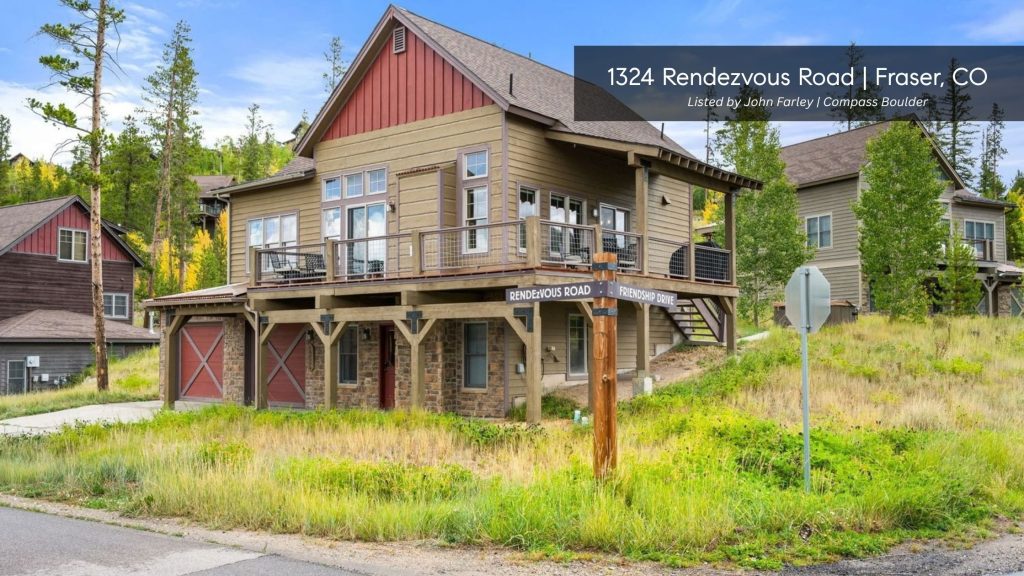
1324 Rendezvous Road offers a mountain home base in Fraser with year-round access to the Winter Park lifestyle.
FRASER | $1.75M
The Mountain Basecamp
1324 Rendezvous Road | Fraser, CO
3 Beds | 4 Baths | 1,917 SF | .24 Acres
Coming Soon
At less than 2,000 square feet, this one immediately demonstrates why comparing Colorado real estate by square footage alone doesn’t tell you much.
Here, what you’re buying is location and lifestyle: a home base in Fraser with Winter Park and year-round mountain recreation at your fingertips. Ski days, mountain biking, hiking, fishing, cool summer evenings and weekends that don’t require packing the car for I-70—you’ve already arrived.
The lifestyle: Mountain-first living for someone who values experiences more than excess square footage.
Best part: This is a Colorado Lifestyle Properties listing, represented by John Farley.
Listing status and price as of publication. Contact us for current availability.
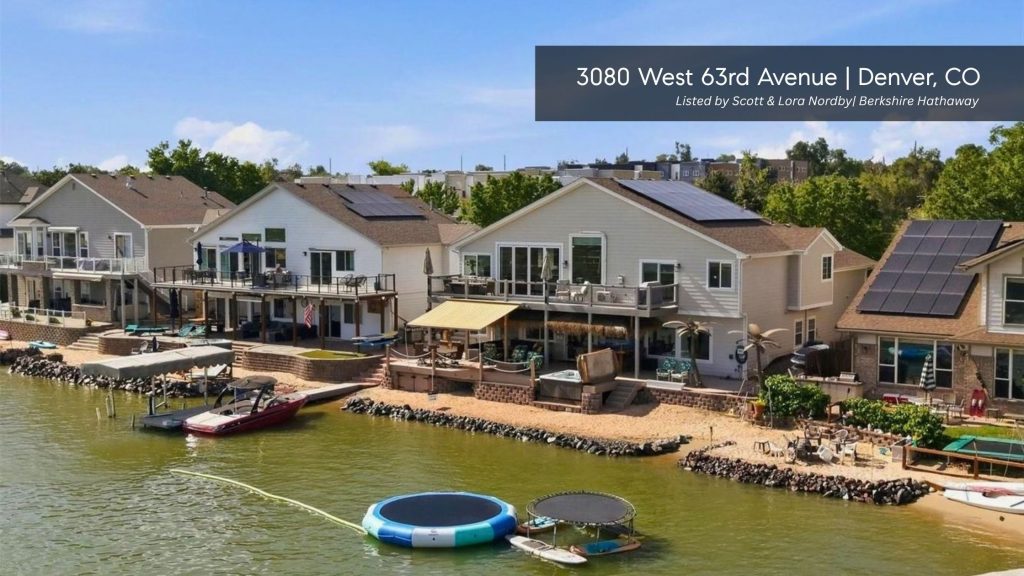
A surprising side of Denver living: 3080 West 63rd Avenue brings boating and private lake access into the city lifestyle.
DENVER | $1.925M
The Unexpected Waterfront Lifestyle
3080 West 63rd Avenue, Denver
4 Beds | 5 Baths | 3,628 SF | .17 Acres
Active
Yes, waterfront living in Denver.
This unusual property is part of a private gated lake community where just 26 properties have access to a private boat launch and lake pass. That creates a version of Denver living most people probably don’t picture: boating, fishing, wildlife and water views at home, while remaining connected to everything the metro area offers.
At more than 3,600 square feet, there’s plenty of room inside—but the real differentiator is outside. In a state where mountain views usually get top billing, having the lake essentially become an extension of your backyard makes this one stand apart.
The lifestyle: For the buyer who wants water to be part of everyday Colorado life without leaving the Denver metro.
What makes it unique: Private lake access and boating in a setting you wouldn’t necessarily expect to find in Denver.
Listed by Lora Nordby and Scott Nordby, Berkshire Hathaway HomeServices Colorado Real Estate, LLC. Listing information and status as of publication.
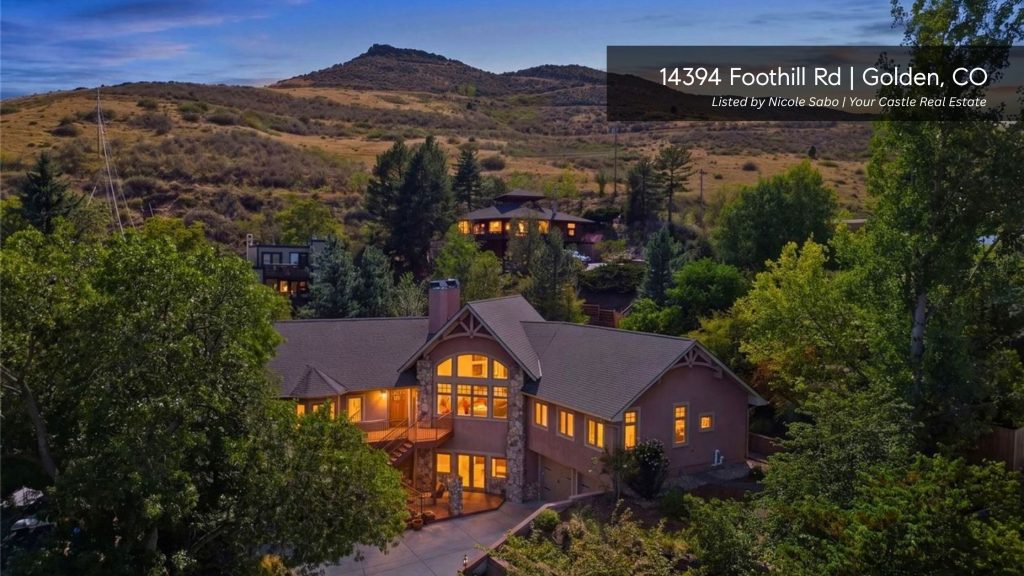
14394 Foothill Road pairs nearly 4,700 square feet with flexible living spaces in Golden’s Applewood Mesa area.
GOLDEN | $1.875M
The Space-to-Grow Home
14394 Foothill Road, Golden
5 Beds | 4 Baths | 4,694 SF | .28 Acres
Active
Head west to Golden’s Applewood area and essentially the same budget buys a very different version of Colorado life.
This custom home offers nearly 4,700 square feet, including multiple main-level bedrooms, two primary suites, a walkout lower level and a private residential elevator. That combination creates unusual flexibility—whether the goal is multi-generational living, accommodating long-term guests or simply finding a home capable of adapting as life changes.
And location is part of the equation. Applewood provides an established residential setting tucked between Denver and the foothills, putting Golden, mountain recreation and the greater Denver area within easy reach.
The lifestyle: An established Front Range neighborhood with the space and flexibility for several generations—or several chapters of life.
What makes it unique: Nearly 4,700 square feet paired with two primary suites, a residential elevator and adaptable living spaces.
Listed by Nicole Sabo, Your Castle Real Estate. Listing information and status as of publication.
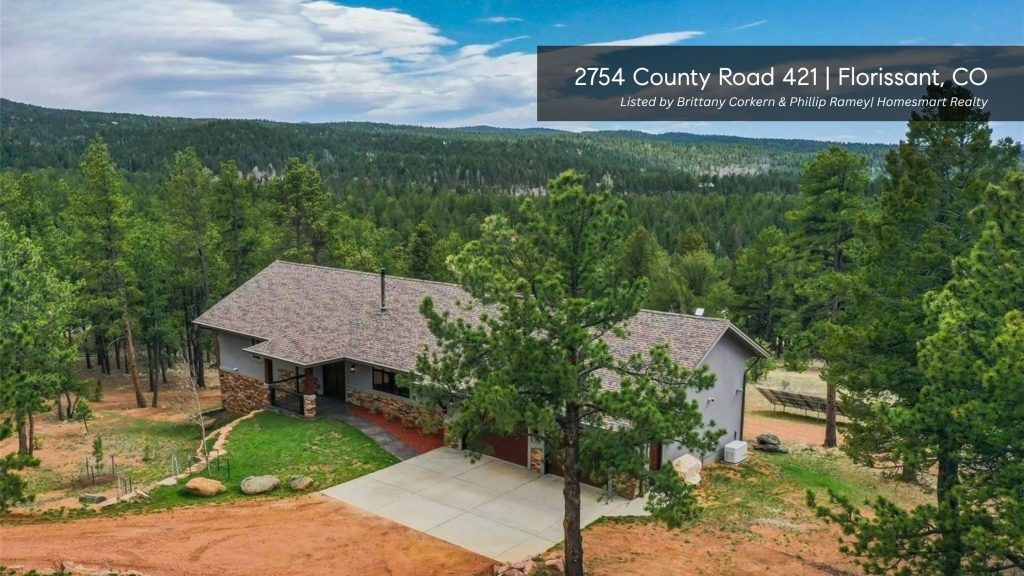
In Florissant, a roughly $2 million budget stretches to more than 38 acres of private Colorado mountain land.
FLORISSANT | $1.975M
The 38-Acre Colorado Escape
2754 County Road 421, Florissant
3 Beds | 3 Baths | 3,354 SF | 38.39 Acres
Active
And then there’s the answer for anyone who looks at a quarter-acre lot and thinks: That’s nice, but what if we added another 38 acres?
This custom-built 2022 home sits on more than 38 acres in Florissant, west of Colorado Springs. Suddenly, our roughly $2 million budget isn’t primarily about neighborhood or square footage. It’s buying privacy, land and room to experience Colorado on an entirely different scale.
The approximately 3,350-square-foot home includes custom windows, cabinetry, interior and exterior doors and high-end kitchen features. But in this comparison, the headline is unquestionably the land.
Compare it with our Denver lake property: the prices are separated by only about $50,000, yet one gives you a compact lot within the metro and the other gives you more than 38 acres.
That’s exactly why “How much house does $2 million buy?” isn’t nearly as interesting as asking how you want to live.
The lifestyle: Privacy, acreage and breathing room for someone whose Colorado dream begins where the neighbors get farther away.
What makes it unique: More than 38 acres surrounding a recently built custom home.
Listed by Brittany Corkern & Phillip Ramey, Homesmart Realty. Listing information and status as of publication.
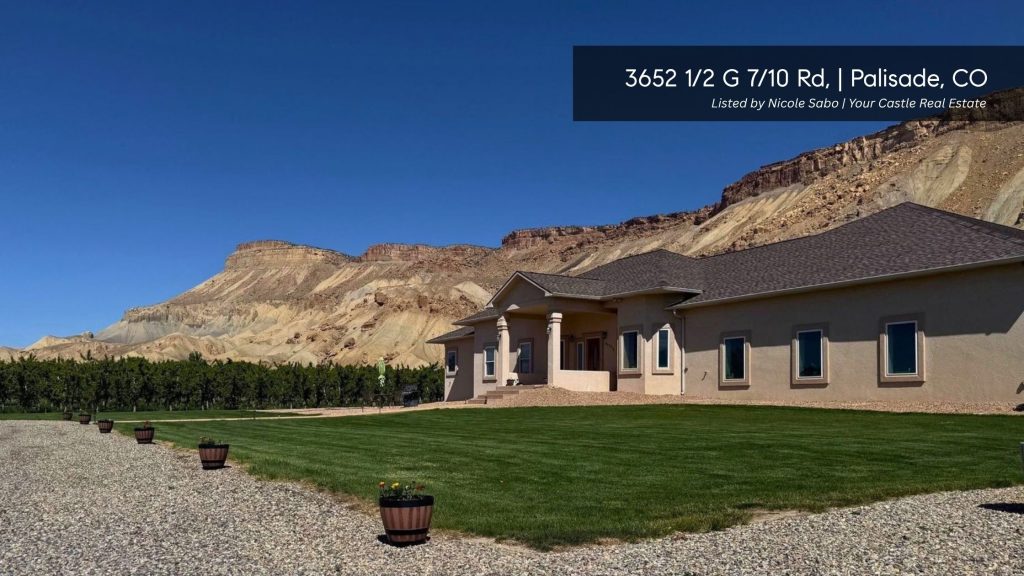
Palisade offers another interpretation of Colorado luxury: acreage, an orchard and dramatic Western Slope scenery beneath Mount Garfield.
PALISADE | $1.999M
The Colorado Wine Country Life
3652 1/2 G 7/10 Road, Palisade
7 Beds | 5 Baths | 4,821 SF | 6.94 Acres
Active
Now let’s head west.
At almost exactly $2 million, this Palisade property offers nearly seven acres, more than 4,800 square feet of living space—and an orchard with an up-close view of Mount Garfield.
The property also includes a large shop and agricultural zoning, and horses are permitted. That makes this far more than simply a large house on a large lot. It’s a property where the land itself can become part of the way you live.
And then there’s Palisade itself.
Colorado’s Western Slope offers a completely different landscape and rhythm from the Front Range or high country. Orchards, vineyards, agriculture and dramatic desert mesas replace Denver’s urban neighborhoods and Fraser’s alpine setting.
For a buyer drawn to land, food, wine, agriculture and a slower pace, this might be the most unexpected interpretation of the $2 million Colorado lifestyle in our entire comparison.
The lifestyle: Western Slope wine-country living with room for an orchard, horses, hobbies—and a lot of houseguests.
What makes it unique: Nearly seven acres, an established orchard, 7 bedrooms, a large shop and dramatic Mount Garfield views.
Listed by Rebekah Mendrop, RE/MAX 4000. Listing information and status as of publication.
by Farley Webmaster | Sep 1, 2026
There’s a moment every September when Colorado seems to change almost overnight.
The mornings get cooler. The light shifts. The mountains take on that unmistakable fall sharpness. And seemingly all at once, entire hillsides of aspen begin turning from green to brilliant shades of gold.
Fall color season in Colorado may be short, but it’s one of the best reminders of why we love living here.
You don’t have to plan a weekend in Aspen or drive across the state to experience it, either. Some spectacular fall foliage can be found within an hour or two of Boulder and Denver—from scenic mountain highways and quiet foothill trails to historic mountain towns that are worth the drive all on their own.
Whether your ideal fall day involves hiking through an aspen grove, packing a picnic, taking the kids for a drive, bringing your camera along for the ride, or simply finding a patio and enjoying the view, here are some of our favorite ways to experience fall along Colorado’s Front Range.
When Do the Leaves Change in Colorado?
If only the aspens followed a calendar.
Colorado’s fall color season varies from year to year depending on elevation, temperatures, moisture, wind and weather. Generally, though, September is prime leaf-peeping season in Colorado’s higher elevations, with color gradually moving into lower elevations as the season progresses.
Around Boulder itself, fall foliage often reaches its best color from late September through mid-October, although Mother Nature always gets the final say.
A good rule of thumb:
- Higher elevations: Start looking for color in mid-to-late September.
- Foothills and mountain towns: Late September into early October is often beautiful.
- Boulder, Denver and lower elevations: Colors can continue well into October.
That progression is part of the fun. Miss peak color on one mountain pass and you may find that the cottonwoods along Boulder Creek are just getting started.
Because peak color can shift quickly—and a windy afternoon can change a mountainside overnight—it’s always worth checking recent conditions before heading out.
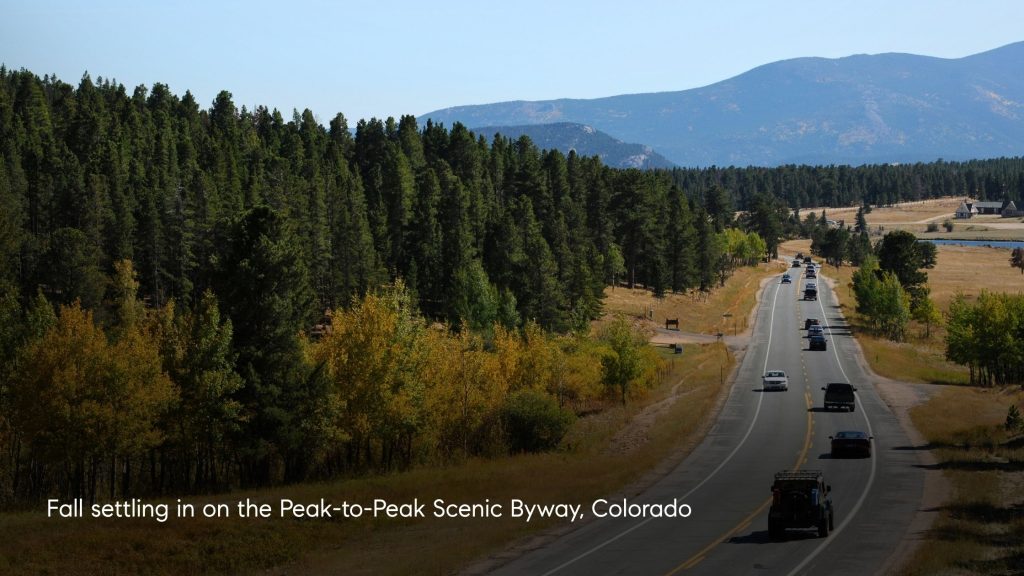
Colorado’s historic Peak to Peak Scenic Byway is one of the Front Range’s quintessential fall drives.
1. Peak to Peak Scenic Byway
Best for: The classic Colorado fall drive
Route: Black Hawk/Central City to Estes Park
Distance: Approximately 55 miles
Give yourself: At least half a day
If you only take one fall drive this year, this is a hard one to beat.
Established in 1918, the Peak to Peak Scenic and Historic Byway is Colorado’s oldest scenic byway, running approximately 55 miles between the historic mining communities of Black Hawk and Central City and Estes Park. Along the way are sweeping views toward the Continental Divide, stretches of evergreen forest, mountain meadows and, during fall, plenty of brilliant aspen.
From Boulder, one of our favorite ways to experience it is to head west through Boulder Canyon on Highway 119 toward Nederland, then connect with Highway 72 and continue north.
And don’t rush.
This drive is less about getting from Point A to Point B and more about stopping when something catches your eye.
Make a day of it:
Start in Boulder. Grab coffee before heading west through Boulder Canyon.
Stop in Nederland. Walk around town, grab something to eat or simply enjoy the mountain air before continuing north.
Follow the Peak to Peak. The stretch north of Nederland provides plenty of opportunities to see the changing landscape with views toward the Indian Peaks and Continental Divide.
Continue toward Allenspark and Estes Park. By the time you reach Estes, you’ve traded Boulder’s foothills for dramatic mountain scenery—and possibly an elk sighting or two.
Colorado tourism officials specifically recommend using designated parking areas rather than stopping along the roadway for photographs, particularly during busy fall weekends.
Local tip: If your schedule allows it, go on a weekday. Peak fall weekends can be extremely busy, and an early start gives you more time to enjoy the scenery before traffic builds.
2. Nederland & the Indian Peaks
Best for: Mountain-town atmosphere + hiking
From Boulder: Approximately 30 minutes to Nederland
Nederland is close enough to Boulder for an easy afternoon escape, but it feels distinctly different the moment you arrive.
Sitting high in the mountains west of Boulder, Nederland is also a gateway to the Indian Peaks Wilderness and some of the most beautiful high-country scenery in the area.
In fall, the drive up Boulder Canyon is part of the experience. Continue beyond town and you’ll find mountain roads, trailheads and pockets of aspen tucked among the evergreens.
This is a particularly good choice if your group can’t agree on what “going to see the leaves” actually means.
Some people can hike.
Some can wander around Nederland.
Some can find coffee.
Everyone wins.
If you’re heading farther into the mountains to hike, remember that conditions at higher elevations can be dramatically different from Boulder. A sunny 70-degree afternoon on the Front Range doesn’t guarantee the same weather several thousand feet higher.
Pack layers, water and more time than you think you’ll need.
3. Golden Gate Canyon State Park
Best for: Hiking, picnics and big views
Location: West of Golden
Trails: More than 35 miles
Golden Gate Canyon State Park is one of the Front Range’s fall treasures—and its proximity to Denver makes it especially appealing when you want mountain scenery without committing to a long road trip.
The park covers more than 12,000 acres of forest, rocky peaks and mountain meadows, with many areas bordered by stands of aspen. More than 35 miles of trails provide options ranging from short walks to longer hikes.
One particularly scenic destination is Panorama Point, where views can extend for roughly 100 miles along the Continental Divide on a clear day.
For hikers, options include the 2.5-mile Raccoon Trail loop, 3-mile Snowshoe Hare Trail loop and longer routes such as Mule Deer Trail.
But you don’t have to log serious mileage to enjoy the park. Pack lunch, find a designated picnic area and make the drive itself part of the day.
One important fall warning:
Golden Gate Canyon gets busy.
Colorado Parks and Wildlife warns that the park can reach capacity by 9 a.m. on fall weekends. Parking is permitted only in designated spaces, so arriving early—or visiting during the week—is well worth it.
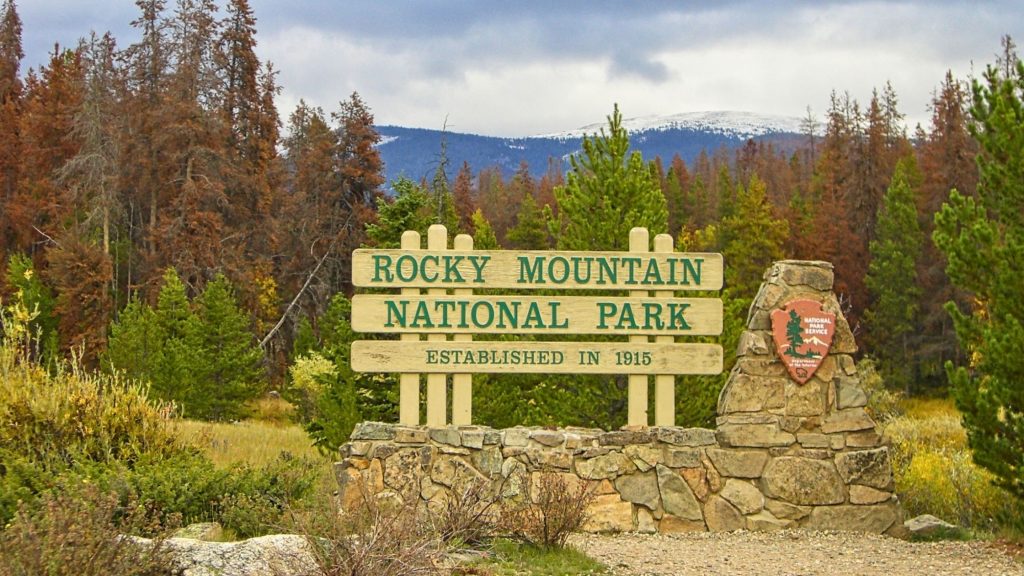
Fall can bring changing leaves, crisp mountain air and the first hints of snow to Rocky Mountain National Park.
4. Rocky Mountain National Park & Estes Park
Best for: Iconic Colorado scenery
Give yourself: A full day
It’s famous for a reason.
Rocky Mountain National Park in September and early October can deliver the full Colorado fall experience: golden aspens, evergreen forests, crisp mornings, snow-dusted peaks and the unmistakable sound of elk bugling across mountain meadows.
The National Park Service notes that September brings changing aspens and other vegetation along with the beginning of fall conditions at higher elevations. It is also elk rut season, making dawn and dusk especially memorable times to be in the park.
If hiking isn’t on the agenda, simply exploring the park by car can still make for a spectacular day.
You can also pair your park visit with time in Estes Park for lunch, shopping or a walk through downtown before heading home.
Know before you go
Rocky Mountain National Park uses a timed-entry system during its busiest months.
For 2026, regular timed-entry reservations are required to enter most areas of the park between 9 a.m. and 2 p.m. through October 12, while the Bear Lake Road Corridor has separate reservation requirements through October 18.
Because regulations and road conditions can change from year to year, always check the National Park Service website before making the drive.
And remember: fall in Rocky Mountain National Park can look suspiciously like winter at higher elevations. Bring layers and be prepared for rapidly changing conditions.
5. Boulder Canyon to Nederland
Best for: A spontaneous afternoon drive
From Boulder: Right outside your door
You don’t necessarily need an itinerary.
Sometimes the best fall plan is simply to point the car west.
Highway 119 follows Boulder Creek through Boulder Canyon toward Nederland, making it an easy option when you have a couple of free hours rather than an entire day.
Once you reach Nederland, you can turn around and enjoy the canyon in reverse, continue north onto the Peak to Peak Scenic Byway, or make Nederland your destination.
It’s one of those little luxuries of living in Boulder: a normal afternoon can turn into a mountain drive without much planning at all.
6. Flagstaff Mountain & Boulder
Best for: Fall color without leaving Boulder
Perfect for: A weekday afternoon or sunset outing
Don’t overlook what’s happening closer to home.
While Colorado’s aspens tend to get most of the fall attention, Boulder puts on its own show as cottonwoods, maples and other deciduous trees shift into shades of yellow, orange and red.
Visit Boulder notes that fall color in town generally runs from late September through October, with early-to-mid October often particularly colorful.
A drive up Flagstaff Mountain gives you a chance to see that transition from above.
Stop at designated overlooks, take a short hike or simply enjoy the view back across Boulder and the plains.
Panorama Point is an especially nice stop for seeing Boulder from above, while nearby trails offer plenty of opportunities to get out of the car.
Then head back downtown for dinner.
Not a bad Tuesday.
7. Boulder Creek Path & Downtown Boulder
Best for: Easy, accessible fall color
Perfect for: Families, bikes, walks and everyday leaf peeping
One of the best things about fall in Boulder is that you don’t always have to chase it.
Sometimes it comes to you.
Take a walk or bike ride along Boulder Creek Path as the cottonwoods turn yellow, wander through downtown neighborhoods beneath mature trees, or spend an afternoon around Pearl Street.
Boulder typically sees its fall foliage later than the high country, which makes this a great option after the mountain aspens have begun to fade.
It also proves that “leaf peeping” doesn’t have to involve a full tank of gas and hiking boots.
Coffee counts.
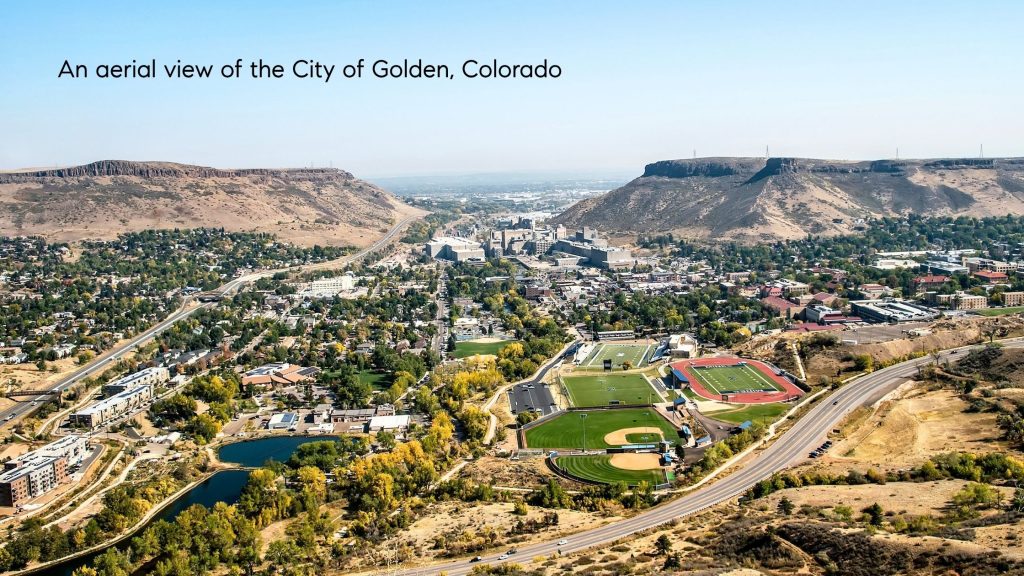
Fall settles into Golden, Colorado, where foothill views and changing leaves make an easy autumn escape from Denver.
8. Golden & the Foothills
Best for: Fall scenery + restaurants + an easy day trip
Golden makes an excellent fall destination because you can combine foothill scenery with a walkable downtown, trails and plenty of places to stop for lunch.
Take your time getting there.
Explore the foothills, walk along Clear Creek, wander through downtown and, if you want more mountain scenery, continue toward Golden Gate Canyon State Park.
For people coming from Denver, Broomfield, Arvada or other parts of the metro area, this is one of the easiest ways to turn an ordinary weekend afternoon into something that feels decidedly Colorado.
9. Kenosha Pass & South Park
Best for: Big aspen groves
From Denver: Plan on a longer half-day or full-day outing
If your definition of fall involves being completely surrounded by aspens, Kenosha Pass deserves a spot on the list.
The drive southwest from Denver along U.S. 285 eventually climbs toward Kenosha Pass before opening into the enormous landscape of South Park. Colorado tourism officials include the U.S. 285 route from Conifer to Fairplay over Kenosha Pass among the state’s recommended fall-color drives.
The contrast is spectacular: dense stands of gold against dark evergreens, followed by expansive views across South Park toward distant mountain ranges.
Kenosha is hardly a secret, however.
Fall weekends can bring heavy traffic and busy trailheads, so go early, consider a weekday and never park where your vehicle blocks traffic or damages roadside vegetation.
This is one place where the journey really is the destination.
10. Make Your Own Front Range Fall Loop
Best for: People who hate following itineraries
Some of our favorite Colorado days don’t have much of a plan.
Pick a town.
Choose a mountain road.
Stop when something looks interesting.
For a Boulder-area outing, that might mean:
Boulder → Nederland → Peak to Peak → Estes Park → Lyons → Boulder
From farther south, you might create a day around:
Golden → Golden Gate Canyon → Peak to Peak → Nederland → Boulder
The point isn’t checking every destination off a list. It’s leaving enough room in the day to pull over safely, walk around a town you’ve driven through a hundred times, take a trail you haven’t explored before or stay for dinner because nobody really wants to head home yet.
That’s often when Colorado is at its best.
A Few Tips Before You Go Leaf Peeping
- Fall weekends in Colorado have become increasingly popular, so a little planning can make the experience considerably more enjoyable.
- Go early—or go midweek. Popular mountain roads, parks and trailheads can fill quickly on peak weekends.
- Check conditions before leaving. Fall color, weather, road closures, wildfire restrictions and trail conditions can all change quickly.
- Download your map. Cell coverage can disappear surprisingly fast once you leave the Front Range. Boulder tourism officials specifically recommend downloading maps before heading onto mountain roads.
- Pack for more than one season. Sunshine in Boulder can coexist with freezing temperatures or even snow at higher elevations.
- Don’t stop in the roadway for a photo. That perfect patch of aspens isn’t worth creating a dangerous situation. Use established overlooks, trailheads and parking areas.
- Leave the leaves where they are. Enjoy Colorado’s public lands responsibly so the people arriving tomorrow—and next fall—get to enjoy them too.
- Have a Plan B. If a parking lot or trailhead is full, keep moving. Colorado Parks and Wildlife specifically recommends having an alternate destination during busy fall periods.
And perhaps most importantly:
- Don’t spend the entire day looking through your phone.
Take the picture. Then put the phone down.
Why Fall in Colorado Never Really Gets Old
There are plenty of reasons people choose to live along Colorado’s Front Range, but access to places like these has to rank pretty high on the list.
In Boulder, you can finish your morning coffee and be winding through Boulder Canyon shortly afterward. From Denver, Golden puts the foothills practically at your doorstep. And throughout the Front Range, trails, mountain towns, scenic highways and open spaces make it remarkably easy to turn an ordinary day into an adventure.
The brilliant gold may only stick around for a few weeks.
Maybe that’s part of why we appreciate it so much.
So grab a jacket, pack some snacks, pick a road and go see what Colorado is doing today.
You never know how different it might look tomorrow.
Finding Your Colorado Lifestyle
For us, real estate has never been only about the house.
It’s about the Saturday morning trail you can reach from your front door. The coffee shop where they eventually learn your order. The route you take into the mountains when the aspens start changing. The neighborhood where you know your neighbors—and the place that simply feels like home.
Whether you’re looking for a walkable home in Boulder, more space in one of the surrounding communities, a foothills retreat or simply trying to figure out where along the Front Range your version of the Colorado lifestyle fits, we’d love to help you explore the possibilities.
Ready to find your place in Colorado? Get in touch with the Colorado Lifestyle Properties team and let’s start the conversation.
by Farley Webmaster | Aug 7, 2026
When Sundance announced in March 2025 that it would leave Utah and make Boulder its new home beginning in 2027, the news was understandably huge. One of the world’s best-known independent film festivals was coming to Colorado, and Boulder had landed an opportunity cities across the country had competed for.
More than a year later, the conversation has changed.
The question is no longer simply, “Isn’t it exciting that Sundance is coming?” Now, with the inaugural Boulder festival scheduled for January 21–31, 2027, we’re beginning to see what hosting an event of this scale may actually mean for the people who live, work and own property here.
And the answer is more complicated — and more interesting — than a busy week on Pearl Street.
This Is a Very Big Event Coming to a Relatively Small City
For perspective, the 2025 Sundance Film Festival attracted 85,472 unique in-person attendees. More than 130,000 screening tickets were redeemed, and roughly one-third of attendees came from outside Utah.
The economic impact was substantial. Sundance estimates the 2025 festival contributed $196.1 million to Utah’s economy, supported approximately 2,697 jobs, generated $103.3 million in wages and produced more than $21 million in state and local tax revenue.
Those figures shouldn’t simply be transferred to Boulder — Park City, Salt Lake City and Boulder are very different markets, and no one yet knows exactly what attendance or spending will look like here.
But they illustrate the scale of what is coming.
Boulder and regional partners committed approximately $34 million in incentives over the next decade to help bring the festival to Colorado. The city is now preparing transportation systems, venues, licensing regulations and lodging capacity to accommodate an influx that could dramatically change Boulder for 11 days every January.
For Local Businesses, January Could Look Very Different
Anyone who has spent a winter in Boulder knows January isn’t exactly the height of tourist season. That is part of what makes Sundance particularly interesting for the local economy.
Thousands of visitors arriving during an otherwise quieter part of the year could mean significant additional business for restaurants, coffee shops, retailers, transportation providers, caterers, event venues and other service businesses.
And Sundance isn’t simply bringing moviegoers. Its industry program alone historically attracts more than 1,800 film-industry professionals from around the world, creating another layer of meetings, private events, hospitality and business activity.
The city is already creating processes for Festival-related business activations and encouraging Colorado businesses and nonprofits to participate in the event.
For downtown Boulder in particular, that creates an interesting possibility: Sundance could establish January as an entirely new economic season.
Then There’s the Lodging Question
This may be one of the most immediate ways Sundance affects Boulder homeowners.
Boulder has roughly 2,900 hotel rooms, according to city officials — nowhere near enough to accommodate an event that historically attracts tens of thousands of people.
To help close that gap, Boulder created an entirely new Festival Lodging Rental License.
Unlike Boulder’s traditional short-term rental rules, the festival license can be available to different property ownership types and does not require the property to be the owner’s primary residence. Under updated rules, even tenants of licensed long-term rentals may participate with their landlord’s permission.
The license allows qualifying homes to be rented during approved festival periods for up to 29 days per year.
That creates a temporary income opportunity that simply didn’t exist for many Boulder property owners before Sundance.
And homeowners have clearly noticed.
As of June, Boulder Reporting Lab reported that the city had already issued more than 260 festival lodging licenses with roughly 610 additional applications pending.
But Don’t Assume Every Boulder Home Is Suddenly a Gold Mine
Some of the early rental numbers have certainly grabbed attention.
Boulder Reporting Lab found homes being advertised for more than $5,000 per night, with some properties listed for more than $100,000 over the 11-day festival.
That doesn’t necessarily mean anyone is paying those prices.
Property managers interviewed by the publication cautioned that some owners appear to be testing the market with extremely high “make me move” pricing and expect rates to normalize as more lodging becomes available.
That’s an important distinction for homeowners.
There is clearly significant lodging demand coming, particularly for properties close to festival venues and transportation. But until Boulder hosts its first Sundance, there simply isn’t enough real-world booking history to determine what a typical property will command.
Sundance May Not Stop at Boulder City Limits
This is where the story gets particularly interesting for the broader Front Range.
If Boulder can’t house everyone — or if Boulder lodging becomes prohibitively expensive — visitors will look elsewhere.
There are signs that is already happening.
Airbnb data reported by Boulder Reporting Lab showed searches for Denver accommodations during the 2027 festival dates running about 10% above normal, while searches in Louisville, Nederland, Longmont, Lafayette and Erie had increased by more than 100%.
That doesn’t mean those communities are about to experience the same impact as Boulder, but it demonstrates how an event centered in downtown Boulder could spread economic activity into neighboring communities.
Hotels, restaurants and businesses along the US-36 corridor and throughout Boulder County may all see some effect, particularly as attendees balance convenience against lodging prices.
What About Boulder Real Estate Values?
This is where we think it’s important to separate what we know from what we might expect.
There isn’t credible evidence yet that Sundance has materially increased Boulder home values.
Real estate prices are influenced by interest rates, inventory, employment, neighborhood desirability, broader economic conditions and dozens of other factors. It would be difficult — and premature — to look at a home sale today and attribute its value to a festival that hasn’t even occurred here yet.
But Sundance could reinforce some characteristics that already command a premium in Boulder.
Walkability. Proximity to downtown. Access to restaurants and culture. Easy transportation. Flexible living spaces. And homes located near major community destinations.
The announced Sundance venues include the Boulder Theater, Dairy Arts Center, Chautauqua Auditorium, Macky Auditorium, eTown Hall, CU Boulder facilities, Boulder Public Library’s Canyon Theater and several other locations, creating a relatively compact festival footprint throughout central Boulder.
For buyers who already value that lifestyle, Sundance becomes one more reason central Boulder feels culturally vibrant and connected.
That doesn’t automatically translate into a higher appraisal. But it may affect how some buyers perceive location.
We’re Already Seeing Investment Around Downtown
Sundance is also arriving at a moment when Boulder is thinking more broadly about downtown activity and infrastructure.
In July, the city announced a tentative agreement for redevelopment of the city-owned lot at 2121 Broadway, including an approximately 110-room hotel. The city specifically noted that the project would add lodging capacity in the downtown core for large-scale events, alongside commercial space, community gathering areas and cultural amenities.
Sundance isn’t necessarily responsible for every new investment Boulder makes from here forward. But a recurring international event of this scale adds another reason to invest in hospitality, transportation, public spaces and cultural infrastructure.
Those changes could ultimately matter far beyond 11 days in January.
There Will Be Trade-Offs, Too
It’s tempting to talk about Sundance only in terms of opportunity, but living through a festival of this scale will undoubtedly come with some challenges.
Traffic, parking, crowding, lodging affordability and disruptions to everyday routines are already part of the conversation.
Boulder is intentionally trying to keep visitors within the city partly because doing so reduces vehicle traffic while keeping visitor spending with Boulder businesses. The city’s new festival lodging program specifically lists reducing vehicle miles traveled and supporting the local economy among its goals.
How successfully all of this works won’t really be known until January.
Sundance Is Becoming Part of the Boulder Lifestyle
For decades, Boulder has been known for the Flatirons, outdoor recreation, CU Boulder, entrepreneurship, natural foods, environmentalism and a fiercely individual local culture.
Now independent film is becoming part of that identity too.
We don’t yet know whether Sundance will meaningfully change real estate values, how much the average homeowner might earn renting during the festival, or precisely how much revenue local businesses will ultimately see.
What we do know is that a globally recognized cultural institution is making a long-term investment in Boulder — and Boulder is changing some of its own policies, infrastructure and business planning to accommodate it.
That’s worth paying attention to whether you own a home downtown, run a business on Pearl Street, live elsewhere in Boulder County or simply care about the future of the community.
By this time next year, we’ll have something we don’t have today: actual Boulder Sundance data.
And we’ll be very interested to see what it tells us.
Learn More About Sundance in Boulder
Interested in learning more about the Sundance Film Festival’s move to Boulder? These resources provide additional information about the festival, community planning efforts, lodging, and economic impact.
by Farley Webmaster | Jul 1, 2026
Smart ideas for Denver, Boulder & the Front Range that save water, reduce maintenance, and keep your outdoor space enjoyable all season long.
Colorado summers are meant for backyard barbecues, evenings on the patio, kids playing outside, and enjoying the incredible scenery that makes living here so special. But if you’ve looked outside lately, you’ve probably noticed how quickly lawns are turning brown—and how frequently we’re hearing about drought conditions, watering restrictions, and wildfire concerns.
The good news? A beautiful yard doesn’t have to mean a perfectly green lawn.
In fact, many Colorado homeowners are discovering that using less water often creates outdoor spaces that are easier to maintain, more resilient during dry summers, and every bit as inviting. Whether you’re thinking about replacing part of your lawn, refreshing your landscaping, or simply looking for ways to conserve water without sacrificing curb appeal, there are plenty of options that fit the Colorado lifestyle.
Why More Colorado Homeowners Are Rethinking Their Lawns
Traditional Kentucky bluegrass lawns require a tremendous amount of irrigation during Colorado’s hot, dry summers. With ongoing drought conditions and varying watering restrictions throughout the Front Range, many homeowners are choosing landscapes that work with Colorado’s climate instead of against it.
Benefits include:
- Lower monthly water bills
- Less mowing and maintenance
- Healthier plants during hot summers
- Better drought tolerance
- Improved curb appeal year-round
- Landscapes that support birds, bees, and butterflies
Instead of one large expanse of grass, many yards now combine colorful native plants, shade trees, decorative stone, mulch, seating areas, and small pockets of lawn where they’re actually used.
Think “Outdoor Living” Instead of “More Grass”
One of the biggest shifts in landscaping trends is focusing on how you actually use your yard.
Ask yourself:
- Where do we spend the most time?
- Do the kids need a place to play?
- Would we rather have a patio than more lawn?
- Could we add raised garden beds?
- Would a fire pit or outdoor dining area get more use than extra grass?
- Creating defined outdoor “rooms” often makes a yard feel larger while reducing the amount of thirsty turf.
Some popular Colorado upgrades include:
- Expanded patios
- Pergolas for shade
- Native flower gardens
- Gravel pathways
- Water-wise container gardens
- Outdoor kitchens
- Cozy seating areas
- Pollinator gardens
Great Alternatives to Traditional Grass
If you still want space for kids or pets, you don’t necessarily have to eliminate grass completely.
Some popular options include:
Keep a Smaller Lawn
Rather than watering your entire yard, reduce your lawn to the areas that actually get used.
Buffalo Grass
A Colorado favorite that requires significantly less water than traditional turf once established.
Fine Fescue Blends
These grasses tolerate drought better and typically require less maintenance.
Artificial Turf (In Select Areas)
Many families install artificial turf only in small play spaces or dog runs. While it’s not the right choice everywhere, it can reduce water use in high-traffic areas.
Natural Play Areas
Instead of grass, consider:
- Wood chip play zones
- Climbing boulders
- Log balance beams
- Sandbox areas
- Gravel play spaces
- Garden paths for exploring
Kids often enjoy these natural play environments even more than a traditional lawn.
Colorado Plants That Thrive With Less Water
One of the easiest ways to create a colorful landscape is by choosing plants adapted to Colorado’s climate.
Popular choices include:
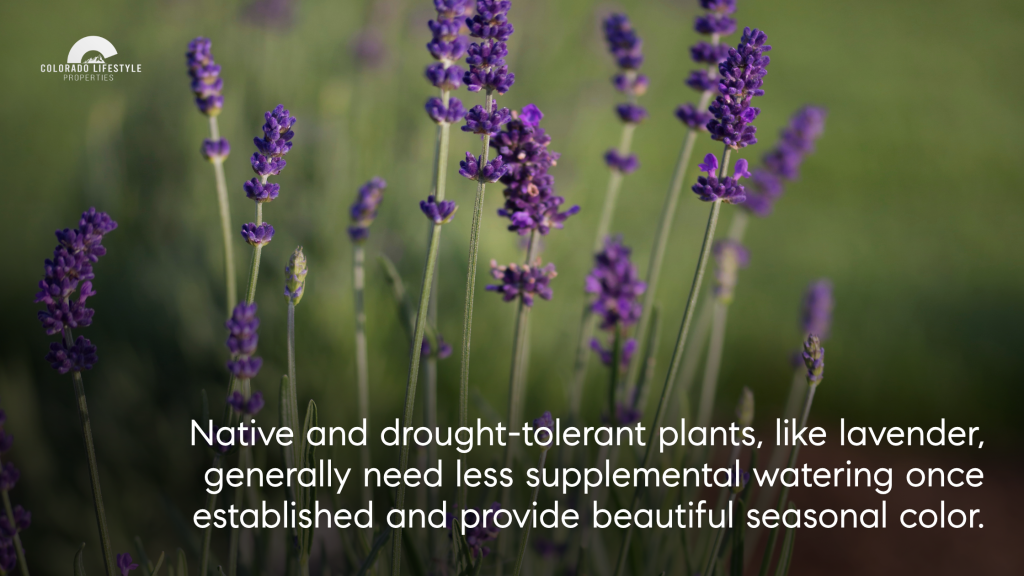
- Lavender
- Russian Sage
- Penstemon
- Blanket Flower
- Yarrow
- Blue Grama Grass
- Little Bluestem
- Serviceberry
- Rabbitbrush
- Rocky Mountain Penstemon
Native and drought-tolerant plants generally need less supplemental watering once established and provide beautiful seasonal color.
Water Smarter, Not More
If you’re keeping existing landscaping, small irrigation changes can make a big difference.
Consider:
- Watering early in the morning
- Using drip irrigation for garden beds
- Adding mulch around plants
- Checking sprinkler heads for leaks or overspray
- Watering deeply but less frequently
- Grouping plants with similar water needs together
Many Front Range communities also offer free irrigation evaluations and rebates for upgrading older sprinkler systems.
Mountain Living? Don’t Forget Wildfire Mitigation
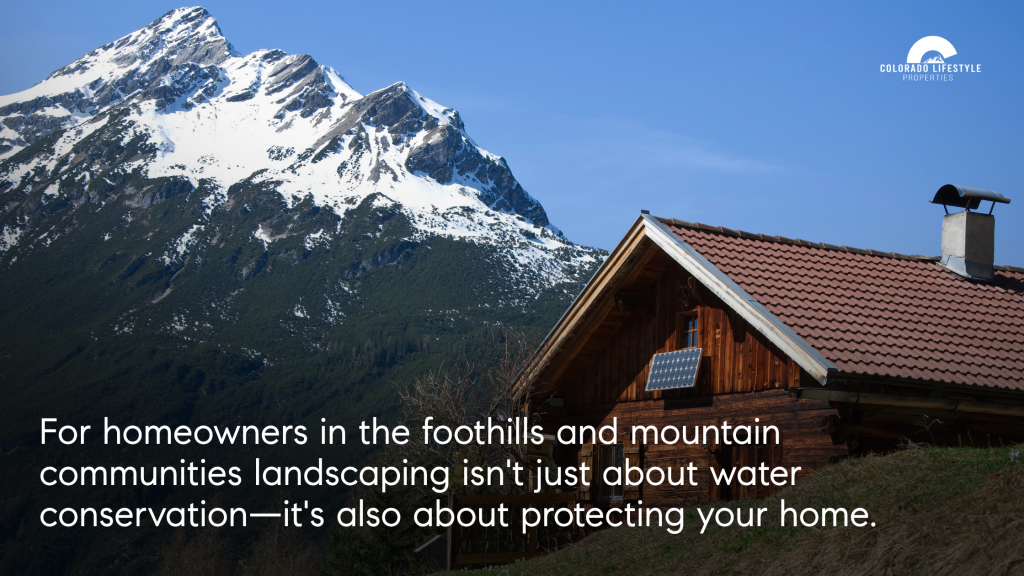
For homeowners in the foothills and mountain communities throughout Boulder County, landscaping isn’t just about water conservation—it’s also about protecting your home.
Creating defensible space around your property can help reduce wildfire risk while still maintaining a beautiful landscape.
Simple improvements include:
- Removing dead vegetation
- Keeping tree branches trimmed away from roofs
- Using rock mulch close to the home instead of combustible mulch
- Spacing shrubs appropriately
- Cleaning pine needles from decks and gutters
- Selecting fire-resistant plant varieties
Many mountain homeowners are finding that wildfire-wise landscaping naturally pairs with drought-tolerant design.
Check Your Local Watering Rules
Water restrictions vary depending on where you live, and schedules can change throughout the season.
Before adjusting your irrigation schedule, check with your local water provider for the latest watering guidelines and conservation resources.
Residents in communities throughout Boulder County, Denver, Broomfield, Louisville, Lafayette, Longmont, Erie, Westminster, Arvada, and surrounding areas may all have slightly different watering schedules or recommendations.
Trusted Local Professionals We Recommend
If you’re thinking about transforming your landscape, it helps to have experienced professionals who understand Colorado’s unique climate, soils, water restrictions, and design challenges. Over the years, we’ve had the opportunity to work with some fantastic local companies that we feel confident recommending.
For Landscape Design & Water-Wise Planting
Lyons Landscaping | 303-335-0622
Whether you’re looking to refresh existing beds, replace high-maintenance turf, or create a beautiful drought-tolerant landscape, the team at Lyons Landscaping has extensive experience designing outdoor spaces that thrive in Colorado’s climate. They can help you select plants, irrigation solutions, and layouts that balance beauty with water conservation.
For Custom Hardscapes & Outdoor Living
Stockscapes
Easton Stock | 303-520-5060
If you’re considering replacing portions of your lawn with patios, retaining walls, stone pathways, seating areas, or other custom hardscape features, Easton Stock of Stockscapes is an exceptional local craftsman. Thoughtful hardscaping can dramatically reduce water use while creating outdoor spaces that are both functional and beautiful—perfect for entertaining, relaxing, and enjoying Colorado’s incredible weather.
Whether you’re making a few small changes or planning a complete backyard transformation, working with professionals who understand Colorado landscapes can make the process much smoother.
Thinking About Investing in Your Outdoor Space?
Whether you’re planning to stay in your home for years or getting ready to sell, a thoughtfully designed, water-wise landscape can improve curb appeal, reduce ongoing maintenance, and become one of your favorite places to spend time.
If you’re wondering which landscaping improvements make the most sense for your home—or you’re looking for recommendations on trusted local professionals—we’re always happy to share our experience and connect you with people we know and trust.
Reach out to John and Karen anytime. We love helping homeowners make smart investments that enhance both their property value and their Colorado lifestyle.
by Farley Webmaster | May 30, 2026
There is something quintessentially Colorado about spending a sunny Saturday morning strolling through a farmers market. Whether you’re picking up freshly harvested Palisade peaches, locally grown vegetables, artisan breads, or handcrafted goods, farmers markets offer more than just groceries—they provide a direct connection to the people, places, and communities that make Colorado such a special place to call home.
From the Western Slope to the Front Range, Colorado is home to dozens of thriving farmers markets and farm stands. Throughout the growing season, residents can find everything from organic produce and grass-fed meats to locally roasted coffee, fresh flowers, honey, jams, and handmade products. These markets have become gathering places where neighbors connect, small businesses thrive, and visitors experience the unique character of Colorado communities.
For those considering a move to Colorado, access to local food, outdoor living, and strong community connections often ranks high on the list of lifestyle priorities. Fortunately, whether you’re in Boulder, Denver, Longmont, Golden, Louisville, Lafayette, or one of the many surrounding communities, chances are there’s a farmers market just minutes away.
Click on the points on the map to locate a farmers market near you- visit their website for more information about each.
Why Colorado Farmers Markets Are So Popular
Colorado’s diverse growing regions produce an incredible variety of seasonal foods. During the summer and early fall months, market visitors can enjoy:
- Colorado-grown fruits and vegetables
- Farm-fresh eggs and dairy products
- Local honey and preserves
- Fresh-cut flowers
- Artisan breads and baked goods
- Grass-fed meats and specialty foods
- Handmade crafts and gifts
- Live music and family-friendly events
Beyond the products themselves, farmers markets embody the active, community-focused lifestyle that attracts so many people to Colorado.
Some of Our Favorite Farmers Markets in the Denver & Boulder Region
Widely regarded as one of the premier farmers markets in the country, the Boulder Farmers Market has been a local institution for decades. Located along Boulder Creek, the market features Colorado-grown produce, local ranchers, prepared foods, flowers, artisan products, and a vibrant atmosphere that draws both residents and visitors throughout the season.
Serving one of Denver’s premier shopping districts, the Cherry Creek Fresh Market offers a blend of local farms, gourmet food vendors, specialty products, and artisan goods. It’s an ideal stop for residents seeking fresh ingredients and a lively weekend experience.
The Erie Farmers Market has quickly become a favorite summertime tradition for residents throughout the northern Front Range. Held in the heart of downtown Erie, the market brings together local farmers, food producers, artisans, and small businesses in a welcoming community setting. Visitors can shop fresh Colorado-grown produce, baked goods, specialty foods, handmade products, and seasonal offerings while enjoying live music and family-friendly activities.
As one of Colorado’s fastest-growing communities, Erie perfectly blends small-town charm with modern amenities, and the farmers market reflects that spirit. It’s a wonderful place to connect with neighbors, support local businesses, and experience the strong sense of community that continues to attract homebuyers to Erie and the surrounding region.
One of Northern Colorado’s most beloved community traditions, the Fort Collins Farmers Market brings together local farmers, ranchers, bakers, and artisans in a vibrant outdoor setting. Visitors can shop fresh seasonal produce, specialty foods, flowers, and handcrafted goods while enjoying the welcoming atmosphere that reflects Fort Collins’ active, community-focused lifestyle.
Nestled near downtown Golden, this market attracts visitors from across the Denver metro area. Fresh produce, locally made products, and stunning foothill views make it a perfect weekend outing before exploring Golden’s shops, trails, and restaurants.
Located in the heart of the Highlands neighborhood, this market combines fresh local food with one of Denver’s most energetic community atmospheres. It’s a great example of how Colorado neighborhoods bring together local commerce and outdoor living.
Known for its friendly small-town feel, the Lafayette Farmers Market combines local produce vendors with food trucks, live entertainment, and community events. It’s a favorite destination for families looking to enjoy a relaxed evening outdoors.
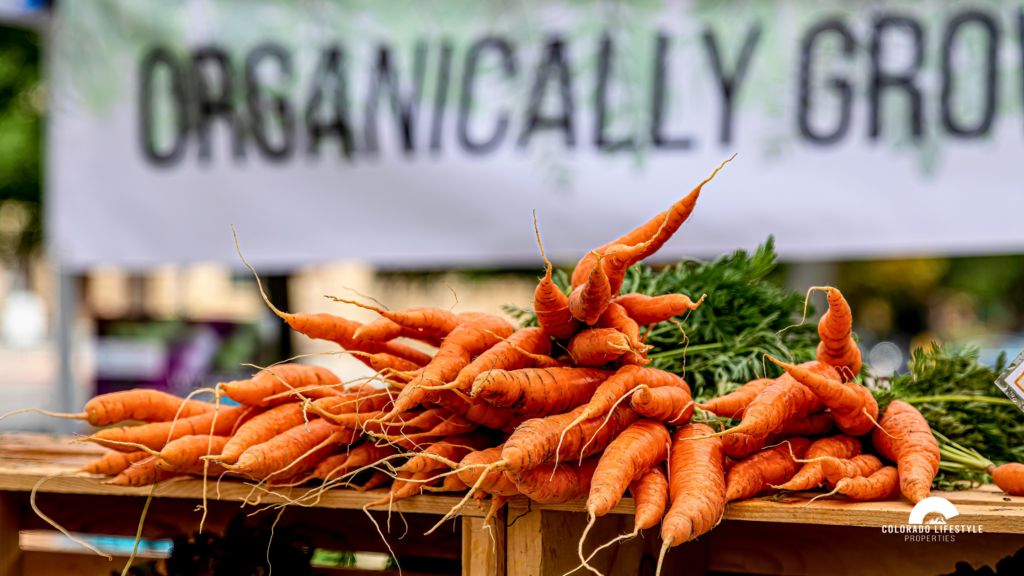
Longmont’s farmers market offers a welcoming community atmosphere with a strong focus on local agriculture. Visitors can shop seasonal produce, specialty foods, fresh baked goods, and locally crafted products while supporting farmers and small businesses from throughout Boulder County.
The Louisville Farmers Market provides a charming blend of fresh food, local artisans, and neighborhood connections. Set against the backdrop of one of Boulder County’s most desirable communities, it reflects the walkable, community-oriented lifestyle that makes Louisville so popular.
One of Denver’s most beloved neighborhood markets, South Pearl Street Farmers Market stretches along a vibrant shopping district filled with local businesses. Visitors can browse an impressive selection of produce, specialty foods, flowers, and artisan goods while enjoying one of Denver’s most walkable neighborhoods.
Beyond Farmers Markets: Colorado’s Farm Stands & Agricultural Heritage
While farmers markets often get the spotlight, Colorado’s agricultural roots extend far beyond weekly market days. Throughout the state you’ll find family-owned farm stands offering fresh produce directly from the source.
Seasonal favorites include:
- Palisade peaches from Colorado’s Western Slope
- Olathe sweet corn
- Fresh berries and cherries
- Pumpkin patches and fall harvest markets
- U-pick farms throughout the Front Range
- Local flower farms and garden centers
These destinations provide opportunities to support local agriculture while experiencing the rural landscapes that help define Colorado’s character.
Living the Colorado Lifestyle
One of the things we love most about Colorado is the incredible variety of experiences available within a short drive. A morning at the farmers market can easily turn into a hike in the foothills, lunch on a sunny patio, or an afternoon exploring one of the state’s charming downtown districts.
Whether you’re already fortunate enough to call Colorado home or you’re considering a move to the Front Range, farmers markets offer a wonderful way to experience the communities, local culture, and lifestyle that make this state so special.
Looking for a home near your favorite farmers market, trail system, or downtown district? We’d love to help you explore the communities that best match your Colorado lifestyle.
by Farley Webmaster | Nov 1, 2025
The Heart of the Holidays in Boulder
The holidays in Boulder are more than snow-dusted Flatirons, Pearl Street lights, and cozy mountain evenings. They’re a chance to slow down, reconnect, and make a difference close to home.
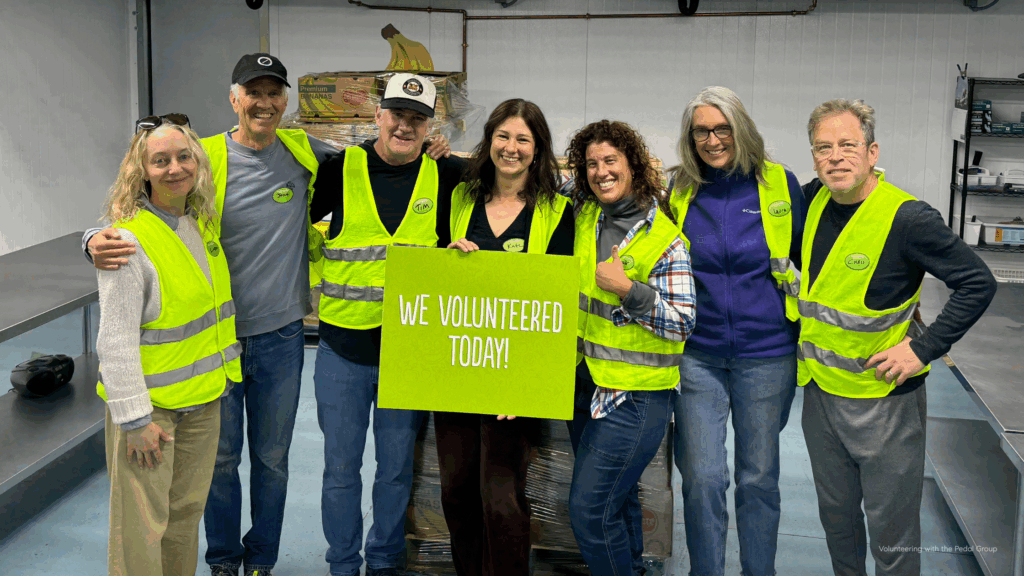
Whether you’re packing food, tending a garden, or walking a rescue dog, giving back during the holidays strengthens the community spirit that makes Boulder so special. And in a city where sustainability, compassion, and connection are part of daily life, there’s no shortage of ways to help.
Here are ten local nonprofits and volunteer opportunities—including some of our favorites—that invite you to make this season about community, kindness, and Colorado-style giving.
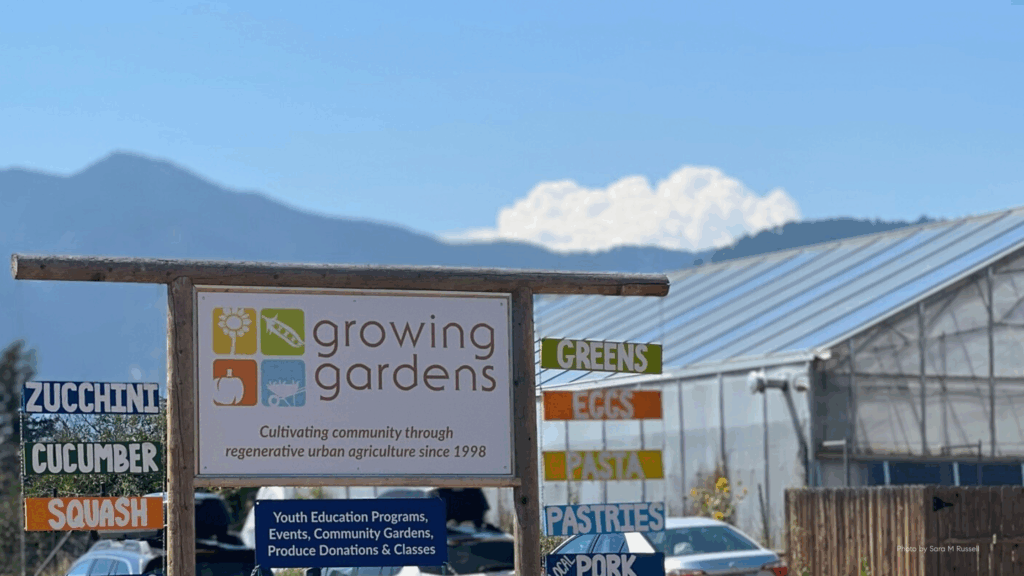
1. Growing Gardens
Cultivating community through sustainable agriculture
Growing Gardens transforms urban spaces into thriving community farms that promote food security and environmental education. Volunteers help with planting, harvesting, and maintaining gardens or supporting youth and educational programs.
Why it’s great for the holidays:
Connects families to nature even in the off-season.
Perfect for outdoor enthusiasts and eco-conscious volunteers.
Holiday idea: Volunteer for winter garden prep or donate to their food access programs in someone’s honor.
2. Community Food Share
Fighting hunger across Boulder and Broomfield Counties
Community Food Share distributes millions of pounds of food each year to families in need. Volunteers can sort donations, pack food boxes, or help with food distribution events.
Why it’s great for the holidays:
Provides immediate impact during a time of high demand.
Ideal for families, offices, or friend groups who want to serve together.
Holiday idea: Host a neighborhood food drive or sponsor a volunteer shift.
3. Luvin Arms Animal Sanctuary
Compassion in action for rescued farm animals
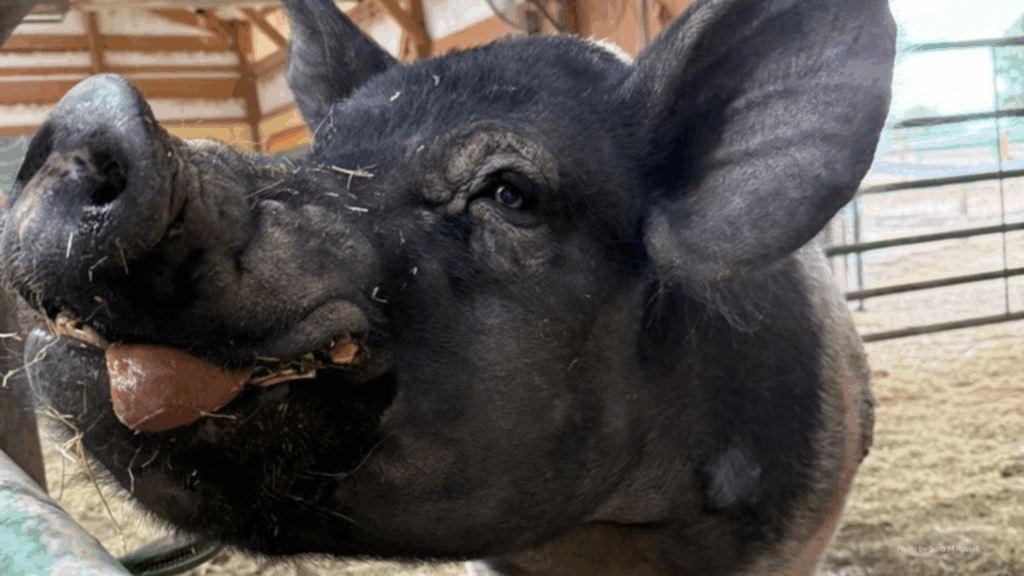
Located in Erie, Luvin Arms offers refuge for rescued farm animals and inspires compassionate living through education and community events. Volunteers help with feeding, cleaning, and animal care—or assist with tours and events.
Why it’s great for the holidays:
Meaningful hands-on experience that nurtures empathy.
Great for kids, families, or animal lovers.
Holiday idea: Sponsor a rescued animal as a heartfelt gift.
4. Humane Society of Boulder Valley
Creating healthy relationships between pets and people since 1902
Help pets find homes this season by volunteering at the Humane Society. Opportunities include dog walking, cat care, assisting in the shelter clinic, and supporting adoption events.
Why it’s great for the holidays:
Warms the heart and helps animals in need.
Flexible volunteer shifts available.
Holiday idea: Donate pet toys, food, or blankets—or adopt your next furry family member.
5. Boulder Bridge House
Meals, mentorship, and second chances
Bridge House provides housing, job training, and hot meals to people experiencing homelessness. Volunteers can assist in the community kitchen, serve dinners, or mentor individuals in the Ready-to-Work program.
Why it’s great for the holidays:
Addresses one of the most pressing local needs.
Perfect for individuals or small groups.
Holiday idea: Create “warmth kits” with gloves, socks, and snacks to donate alongside your volunteer shift.
6. Harvest of Hope Pantry
Providing dignified food access for all
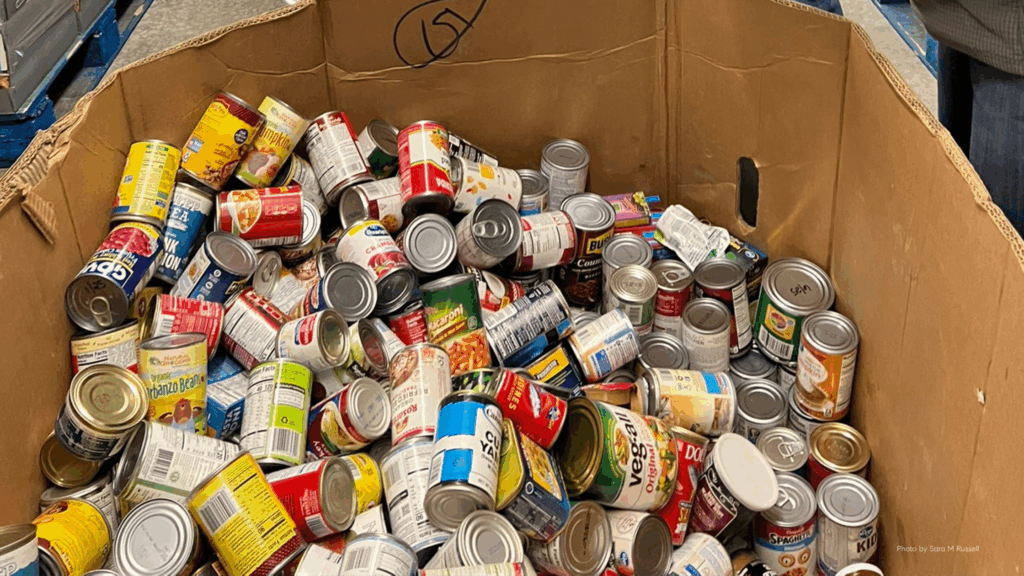
Harvest of Hope offers groceries to individuals and families who need extra support. Volunteers assist with food sorting, grocery bag packing, and delivery services.
Why it’s great for the holidays:
Easy to fit into a busy schedule.
Directly supports Boulder’s food security efforts.
Holiday idea: Host a pantry drive or volunteer with your kids to see giving in action.
7. EFAA (Emergency Family Assistance Association)
Supporting Boulder families in crisis
EFAA provides food, housing, and emergency support to local families. Volunteers help organize donations, assist in the food pantry, or wrap gifts for their Holiday Gift Program.
Why it’s great for the holidays:
Helps ensure every family experiences holiday warmth and stability.
Perfect for volunteers of all ages.
Holiday idea: Adopt a family through EFAA’s holiday program.
8. Boulder Shelter for the Homeless
A warm place to rest this winter
This organization provides food, shelter, and resources to individuals experiencing homelessness. Volunteers can help with meal preparation, donation sorting, and event support.
Why it’s great for the holidays:
Cold months bring greater need for compassion and supplies.
Short volunteer shifts make it accessible to most schedules.
9. Boulder Open Space & Mountain Parks (OSMP)
Give back to the trails that give so much to us
If you prefer the outdoors, join a volunteer trail crew or environmental restoration event through OSMP.
Why it’s great for the holidays:
Combines community service with fresh mountain air.
Family-friendly one-day projects available.
Holiday idea: Make it a new holiday tradition—service and sunrise over the Flatirons.
10. Community Cycles
Empowering mobility and sustainability through bikes
Community Cycles refurbishes and donates bicycles to those in need. Volunteers help repair bikes, teach workshops, and promote sustainable transportation across Boulder.
Why it’s great for the holidays:
Supports mobility and environmental goals.
Especially fun for bike enthusiasts and teens.
Holiday idea: Donate a used bike or volunteer at their annual Holiday Kids Bike Giveaway.
Simple Ways to Give Back This Season
Even if your schedule is packed, small gestures go a long way:
- Donate gently used winter gear.
- Send grocery gift cards to local families.
- Share volunteer opportunities with friends.
- Make a monthly giving commitment to a local nonprofit.
Every act of generosity—big or small—creates ripples of good that spread through the Boulder community.
Giving back isn’t about doing it all—it’s about doing what you can, with heart. From farms to food banks and animal shelters to mountain trails, Boulder is full of opportunities to serve and connect this holiday season.
Whether you join a volunteer day, adopt a family, or simply lend a helping hand, your compassion helps make this city—and the season—shine brighter.
